

 DE
DE ES
ES RU
RU FR
FR ZH
ZH HI
HI GR
GR


7 – Powerful States
“The most important hour in our life is always the present moment; the most significant person in our life is always the one standing before us; the most necessary work in our life is always love.”
Leo Tolstoy
What an exhilarating day! I traveled to Brussels in the early morning hours, and now I’d been hanging on every word of this man—who had accompanied me for over five years—since dawn until this very moment. He had entered my life unexpectedly and yet impressed me so deeply from the first day. At first, it felt like a distant, blurry dream.
I devoured his books on personal development, never wanting to miss a single sentence. Then I stumbled on a few of his tapes and walked around for months with a Walkman clamped to my ear, utterly captivated by his voice. Today was the day I would see him in person for the first time. A pleasant tingle swept over me as I entered the hall. Two thousand people from around the world waited with me. Massive video screens and sound systems announced a four‑day “party seminar.” A hush fell, then fast, loud, joyful music burst forth. A dance troupe whipped the crowd into a frenzy. Minutes later, he appeared as if from nowhere—a towering giant over two meters tall, vigorous and alive. He leaped and cheered. How many years had I waited for this moment?
Now my great teacher stood only meters away—unmistakable in his dynamic, rousing voice that would soon carry me into an unprecedented state of excitement. His expressive body language mastered every surprise on stage. That afternoon a huge fire was lit outdoors—not to warm us, but so we could walk across nine hundred‑degree coals! At last I had my chance: to shake Anthony Robbins’s hand and speak a few words with him. Then back inside for final motivation before the dangerous feat. A warning—people had died walking these coals. I had to sign a waiver taking full responsibility.
I didn’t even read the text. I slipped off my shoes and socks and joined the others outside. It was late. At two a.m. I stood barefoot before that glowing carpet… It had been a long day, but now that I felt the heat on my skin, I was wide awake. I made a quick, deliberate motion—once, twice, three times—anchoring myself in energy. In seconds I felt unstoppable, stronger than ever. Nothing could keep me from crossing. In an instant, fear became strength. Eyes forward, I stepped on—“cool grass, cool grass”—three, four, five, six, seven slow, stomping steps, met with indescribable cheers.
Now I was a fire‑walker! But more than that, I’d learned how to transform any fear in a split second into power. I hadn’t simply learned to walk on coals, but to change my own states—turn grief into hope, pain into joy, and hatred into love. No longer would my mood be left to chance; I held one of the greatest keys to personal success. In this chapter, I’ll share these methods so you, too, can conquer any situation.
Today Is a Good Day
You know those days when everything flows effortlessly? A good message follows another, tasks are easy, ideas come naturally, and you achieve brilliant results. Perhaps you’ve had an extraordinary success, with pats on the back from every side and the feeling that the world couldn’t be big enough. Buoyed by success, you tackle new challenges.
Jesse Owens Breaks Six World Records in 45 Minutes
One such day was May 25, 1935, for American track star Jesse Owens—a day now known as the “Day of Days” in athletics. The 21‑year‑old had fallen and injured his back just a day before, yet by 3:15 p.m. he tied the 100‑yard world record in 9.4 sec. Ten minutes later he leaped 8.13 m, surpassing the old mark by 15 cm—the first human to clear eight meters. That record stood for 25 years! At 3:34 p.m. he ran 220 yards in 20.3 sec, another record that lasted 15 years. After a 25‑minute break, at 4 p.m. he set a third record—200 m hurdles in 22.6 sec. In just 45 minutes, Owens shattered six world records!
Bad Days
Of course, alongside those elated days, there are days when nothing works. Failures and mishaps dog your every step. Your body feels limp, and your thoughts turn negative. What if you could choose your mental state and change it at will? What if you woke up each day in a powerful, resourceful state, ready for any task? Wouldn’t that transform your life?
“He who conquers others is strong; he who conquers himself is mighty.”
Lao Tzu
Over a single day you face many demands: moments when you need mental openness to learn, physical peak to play sports, tenderness to be a loving partner, or courage to handle fear or sadness. Sometimes we smoothly shift from one state to another; other days we lack the ability to enter the optimal state when we need it most. Opportunities slip by and life feels harder. In my experience, the ability to place yourself into resourceful states at will is priceless. Some people often have energy—but not at the right moment. They ace rehearsals but freeze during the real performance. True power arises when you can, within seconds, enter any desired state, wherever and whenever you need it. That is power with control. Learn to turn constricting, heavy states into enthusiastic, uplifting ones. Break free from unconscious moods and direct your power.
Internal Representations & Physiology Shape Our States
To master your states, understand their two main drivers. First are your internal representations—the images, sounds, and feelings you generate. Second is your physiology—how you use your body, your breathing, posture, movement, and so on. Both interact with your nervous system to produce your emotional state.
Imagine you must give a talk on an unfamiliar topic without proper preparation. You step on stage, eyes downcast, shoulders slumped, voice timid—you fail miserably. Now imagine you’re the master of this subject, greeted as a honored guest. You stand tall, speak loudly and passionately; your audience hangs on every word. Which inner scenario better motivates you to prepare and deliver a stellar talk? Creating these inner conditions is the first step.
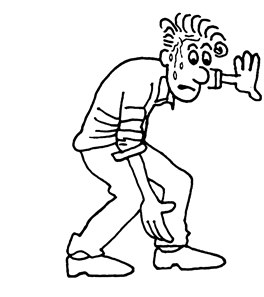
Defeated Physiology
Now try this: stand up straight but let your arms and shoulders droop. Drop your chin, gaze at the floor, let your mouth fall slack, breathe shallowly, hardly move. Hold this for a minute or two before reading on. How did you feel? Next, still slumped, try to say convincingly, “I feel great!”—and observe your incongruence.
Congruence
When your nonverbal posture clashes with your words, that’s incongruence. When they match, you have congruence, which people trust more than words alone.
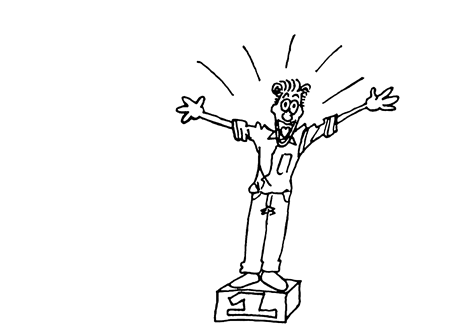
Powerful Physiology
Now flip it: stand tall, look up, raise your arms to the sky, breathe deeply. You may feel like a preacher or priest, but notice how this posture shifts your mood. While holding it, say “I feel terrible!”—you’ll find you can’t maintain that state. Many who try burst out laughing at the absurdity. You simply cannot feel downcast in an expansive, uplifted posture. Remain here a moment: laugh, celebrate as if you’ve just won gold. Punch the air, throw your fists up—feel your new state of unstoppable triumph. Congratulations! You’ve transformed from frustration to euphoria in seconds.
Your behavior follows your state, which follows your internal representations and physiology. Change both, and you change your behavior. Want enthusiasm? Adopt an enthusiastic physiology: laugh, shout, dance, jump—and feel unstoppable. Amplify your expressions and watch your inner experience follow.
Personally, I love exploring new states. I dance myself into ecstasy, bursting with joy; then, when I need to grieve, I allow myself to feel the sadness before returning to optimism. This way, I draw from a vast emotional palette. Try it: dance wildly, spin, throw your arms up, and pretend you’re about to burst with happiness.
I believe physical movement fosters mental agility. If a depressed posture brings depressed thoughts, then an open posture births open, creative ideas. Change your blood’s pace—play sports, try Tai Chi, hop rope like a child, skate, or rollerblade.
Many get stuck in a monotonous routine—limited movements, limited emotions. Over several days, explore a wide emotional range: passion, excitement, euphoria. Push your limits.
When you push physical boundaries, you can push mental boundaries.
Observe your movements—slow, fast, jerky, dynamic, fluid—and note any emotional shifts. Adopt postures typical of certain states: how do you stand when you’re “on fire” for something? What posture conveys pure joy? Fear? Imagine the quirkiest pose—how might it feel to move like Mr. Bean or Michael Jackson? How does a runway model or a soccer coach stand?
Ask such questions and explore how you use your body, discovering new ways to embody desired states.
Also watch others: what does their posture tell you? Test your guesses by asking them how they feel. In negotiations, if your counterpart is rigid, start by pacing their physiology to build rapport, then lead them into a new posture—and thus a new mindset.
Physiology influences our biochemistry, even our immune system. Some mental illnesses respond better to exercise than therapy!
The Impact of Humor and Laughter
Laughter is a prime way to enter a good state. Those who embrace humor in life enjoy not only better moods but also better health. Psychologists Esther Blumenfeld and Lynne Alpern write in “Who Laughs Wins?”: “Humor lightens life—it’s the calorie‑free, fat‑free, all‑natural path to well‑being… Used well, it can positively shape how we think, feel, and act.”
Humor is learnable. It boosts joy, eases problems, livens communication, softens truths, builds rapport, and reduces conflict. William F. Fry, M.D., of Stanford, has studied laughter’s physiology for decades: blood pressure rises, adrenaline surges, chest and shoulder muscles contract, then relax—providing relief. Laughter can reduce headaches and alter pain perception, likely by triggering endorphins, our natural “highs.”
Consider what anchors you in certain states. Perhaps a song from your first love suddenly plays on the radio, flooding you with nostalgia—sadness or joy, depending on the memory. Or a holiday aroma instantly transports you back to your mother’s baking. Places, scents, sounds, even special touches can become emotional triggers. Use this: touch your partner in an unusual way—a gentle nibble at the ear or a specific stroke at the nape—so that later, that touch alone rekindles joy or love. Your partner will instantly recognize you by that unique gesture.

Anchors
These triggers are called NLP anchors. An anchor can be a word, object, place, touch, sound, taste, scent, or anything that quickly and unconsciously elicits a state. We all have thousands of anchors—some we welcome, some we wish we could discard. Think of a breakup: photos, gifts, fragrances, habits—they all act as anchors, reactivating old feelings when encountered. At the airport you hear an announcement about a delayed flight to Mexico—your brother died there. Instantly sorrow returns. Anchors are powerful and often unconscious, driving automatic reactions.
Spatial Anchors
Places can be anchors. Returning to your childhood home or homeland after years often stirs deep emotions, even if the people who shaped those feelings are gone.
Contextual Expectation Effects
Classic experiments with rats and heroin tolerance show that the environment itself becomes an anchor. Rats conditioned to receive heroin in one setting developed tolerance there—overdoses in that familiar context proved less lethal than the same dose in a new environment. Without the contextual anchor, the dose hits as a deadly first exposure.
Pavlov’s Discoveries
Anchoring builds on Ivan Pavlov’s conditioned reflexes. Pavlov found that dogs learned to salivate at a bell once it was repeatedly paired with food. The bell became an anchor for salivation. Any stimulus that consistently accompanies an intense reaction can become a lifelong anchor—with a single pairing, if the emotion is strong enough. A traumatic elevator experience can spark a lifetime phobia.
The Power of Anchors: The Swastika
Hitler weaponized the swastika—once a symbol of luck and blessings, it became an anchor for Nazi ideology. Repetition welded it into daily life under the Third Reich. This shows that anchoring can serve good or evil. Nuclear energy, words, rituals—tools themselves are neutral; purpose defines impact. Jesus’s simple cross became an anchor for love and sacrifice. A few lines transform destiny.
Athletes also use anchors: Becker’s pumped fist, Maradona’s cross before a penalty, boxers’ pre‑fight rituals all harness anchoring. Before we learn how to set anchors in ourselves and others, compile your own anchor list. Use the table below:
My Anchors: Triggers for Positive States
| Images | Words | |
|---|---|---|
| Happy | ||
| Creative | ||
| Passionate | ||
| Enthusiastic | ||
| Curious | ||
| Persistent | ||
| Confident | ||
| Loving | ||
| etc… | ||
| Music | Objects | Places |
State Descriptions
- Happy: You feel as if you could embrace the world, your heart leaps, and you’re fully content.
- Creative: Ideas flood your mind, one sparks the next, leading to unusual solutions.
- Passionate: A fire within drives you to invest intense energy in a cause or person.
- Enthusiastic: You overcome obstacles, ignore doubts, and charge toward your goal.
- Curious: You thirst for knowledge and new experiences, making life vibrant.
- Persistent: You commit wholeheartedly, letting nothing stop you.
- Confident: Security and courage enable you to embrace new challenges.
- Loving: You radiate warmth, openness, and affection.
Scan your surroundings for triggers—photos, music, objects, scents. Personally, I keep a “success anchor” folder: exam papers, certificates, favorite chess games, cherished photos, marathon bibs, poems, jewelry, maps, and a playlist of favorite songs. Knowledge without action is wasted. On a tough day, do you consciously choose your favorite music, don your best clothes, or savor your favorite meal to shift state? Use what you know.
The “Way Up” Becomes My Anchor
One of my most powerful anchors is the “Way Up” nightclub in Hainburg. There I discovered freestyle dancing and overcame my fear of dancing and socializing. For three years, every Wednesday, I braved the dance floor—first timid, then the first out to dance, reveling in newfound friendships and energy. This place forever anchors joy, passion, confidence, and connections—hence the name of this book: Way Up, my personal path to the stars.
How to Set New Anchors
You can apply existing anchors or create new ones—useful when you want to uplift someone else or yourself. The principle is simple: guide the person into a peak state of joy or passion, then introduce a unique trigger at the emotional apex—a word, touch, or gesture they’ve never experienced. Uniqueness ensures it won’t clash with existing anchors. If someone is already in the desired state, simply choose the right moment and set your anchor.
Anchoring Steps:
- Intense emotional state
- Peak of the experience
- Unique, unmistakable trigger
- Simplicity and repeatability
If the person isn’t already in that state, first lead them there by evoking the memory (using submodalities) and adjusting their physiology. At the peak, set your anchor—clench a fist, squeeze a shoulder, speak a distinctive word like “Towanda” or “Tschaka.” The more senses you engage, the stronger the anchor.
Exercise: Moment of Excellence
Guide someone into a peak state:
- Recall three resourceful moments: Ask them to identify three occasions when they felt exceptional. Signal nonverbally when they have them.
- Choose one: Have them pick the most powerful of the three.
- Relive it: “Now step into that moment. Where are you? Notice your posture—mirror it. Describe what you see, hear, and feel (VAKOG). Intensify the peak as much as you like.”
- Set a separator: Have them step out and clear their mind.
- Director’s description: Narrate their recalled experience back to them, using their own words.
- Ensure self‑anchoring: Have them confirm they can re‑enter that state in other contexts and build a mental cue.
Exercise: Resource Circle
- Visualize a colored circle on the floor and choose a single word as your anchor (“Super,” “Yes,” “Power”).
- Select a powerful state.
- Experience that state fully (VAKOG).
- Anchor it with a touch or gesture (e.g. fist‑clench).
- Maintain the feeling, look at the circle, breathe deeply, speak your word, and step into it.
- Enjoy, then step out.
- Repeat with other states as desired.
- Visualize a challenging situation, step into the circle, say your word, breathe—and note how your perception shifts.
Stacking Anchors
Build a composite anchor by linking several resource states to the same trigger. For example, use “enthusiastic,” “happy,” and “confident.” Enter each state fully, then fire the same anchor (e.g. squeeze a finger, then the next) during each peak. This creates a potent, multi‑layered resource anchor. Test it: trigger your anchor after a quick movement or gesture and feel the shift.
Intensify Your Anchor
Just as muscles strengthen with progressive resistance, your anchors grow stronger with practice and increasing intensity. Choose a piece of music with a dramatic climax, turn it up, and prepare to match its energy:
- Assume an energetic stance and relive your most enthusiastic images—make them vivid and colorful.
- At the musical peak, swing your fist forward in a tennis‑like motion, clap loudly, and shout your anchor word.
- Hold the triumph briefly, then relax and repeat with “happy,” then “confident,” each time matching or exceeding your previous intensity.
Afterward, your gesture and word together will catapult you into an empowered state at will.

Chaining Anchors
Like dominoes, chain anchors so a small cue triggers a sequence of states, each leading to the next, culminating in powerful transformation. This is useful when a direct jump from a problematic state to the final resource is too large. Insert intermediate states—each anchored—so you progress step by step back to your desired end state.
Merging Anchors
Fire a negative and a positive anchor simultaneously. Initially you may feel momentarily confused, then a new balanced state emerges. Experiment with a partner: anchor their distress, separate it, then anchor a positive resource and finally merge both. Observe the blended outcome and refine as needed.
Your Name as an Anchor
Your name is one of your most potent anchors—imprinted from day one. Every time someone speaks your name, it stirs associations. Ensure people link your name to positive, optimistic feelings. A name spoken with warmth opens doors. Imagine your name lit across New York—what feelings arise?
Nomen est omen – Your name is your destiny!
Changing a name can reshape destiny—as when one takes a new name upon entering a monastery, shedding an old identity and forging a new one. Why not condition yourself so that each time your name is called, you enter a peak state? Hundreds of daily repetitions of joy—now that’s an anchor worth cultivating.