

 DE
 ES
 RU
 FR
 ZH
 HI
 GR


Healthy Money Mindset

WHY YOUR RELATIONSHIP WITH MONEY DETERMINES YOUR QUALITY OF LIFE
Your relationship with money decides how free, safe and self-determined you live. In this article, Andreas Enrico Brell, the leading Money Mind Coach in the German-speaking world, shows why financial change doesn't start in your bank account, but inside you. You'll find out how generational influences, unconscious money patterns and your inner identity shape your financial reality – and how you can start to rewrite your money story.
A deep dive into money mindset, personality and real financial health.
Financial self-determination doesn't start when you earn more money. It starts when you feel comfortable with more abundance, without your nervous system freaking out.
There are relationships we choose consciously – and there are those that shape us long before we realize how much power they have over our lives. Our relationship with money is definitely in the second category.
It forms quietly, shaped by the stories of other people, by the fears of entire generations, by emotional experiences that burn deep into our nervous system. And yet, hardly any relationship pattern determines so fundamentally how free, safe, and self-determined we can shape our lives.
When it comes to money, we're not fighting with numbers. We're fighting with inner programs, with old scripts that stop our lives from developing the way we want. Money itself is neutral – but we add what makes the relationship: meaning, memories, security, risk, guilt, hope, fear, and longing.
To heal this relationship, we don't need to change our bank statement, but the story we tell ourselves about it. If you don't know your relationship with money, you unconsciously live by an old script. If you understand it, you start writing it yourself for the first time.
And that's exactly why financial transformation doesn't start with a new bank account. It starts with clearing up a relationship.
The Generational Lens
– why we feel what we feel when it comes to money
Before we could form our own conscious opinion about money, we already had a feeling, a physical reaction, a neurological connection. Every generation has experienced money in its own way and passed on those experiences, often nonverbally, through what we observed in the behavior of people around us.
People mainly learn by example. We don't just pick up conscious beliefs, but also unconscious physiology, tone, inner states. A child doesn't have to explicitly hear: "Money is taboo," it's enough if they sense their mom's body tension when opening bills, their dad's changed voice during bank talks, the subtle shame in someone's voice when money is discussed, or when everyone whispers because you just don't talk about money.
The Traditionalists (1920–1945) learned through existential experience: money means survival. Scarcity, war, loss – money was a lifeline, a shield, not a tool for shaping life. The neurological link was: No money = danger to life. Anyone who grew up in or was shaped by this generation often carries a deep fear of scarcity, even if there's objectively enough.
The Baby Boomers (1946–1964) internalized: money mainly means security. The future was uncertain after the years of war, so people hoarded, held on, saved. The dominant inner program: holding onto money = feeling safe. Spending was seen as risky. This generation taught us: Be careful, save while you can, then you'll have something in hard times, don't trust that things will always stay the same, be careful and alert.
Generation X (1965–1979) came up with a different equation: money means career, achievement, status. A person's value is measured by work, position and salary. The inner program linked self-worth directly to financial success. If you earn a lot, you're worth a lot. If you have little, you've failed. This generation often struggles with the feeling of never having done enough, even when there's obvious, objective success.
Generation Y (1980–1995) shifted the focus completely: money means freedom and meaning. Working for fulfillment instead of just for retirement. A new map was drawn, where values beyond just material security found space. This generation asks: "Does this make me happy?" instead of "Does this make me rich?" and often wrestles with an inner conflict between searching for meaning and financial stability.
Generation Z (1996–2010) navigates with a totally different system: money means flexibility, digital options, instant results. It's a tool that's always available, beyond physical boundaries. Money is a number on an app, not a physical banknote, not tangible, barely even experienced. Income is a portfolio, not a fixed salary. Having time is more important than having money or a career. This generation experiences money as fluid, and often as unstable, fragmented and hard to pin down, because the reference point that was so important to previous generations is missing.
This generational perspective shows: Many of our current beliefs about money aren't our own consciously chosen programs. We just took them on and never questioned them, because that's how it was, because that's what was modeled for us, to fit in, to stay part of the system – not because those beliefs actually serve us or match our own goals.

The Invisible Architecture That Shapes Your Life
– and that you've drawn yourself
Imagine navigating your whole life with a map you didn't draw yourself. A map where certain paths are marked as dangerous, certain goals as unreachable, certain opportunities as "not for me."
This map is your inner idea of money and what it means to you. It's not the truth about money, just your subjective interpretation, filtered through decades of conditioning.
A doctor who learned as a child that healing is a calling and a calling shouldn't cost anything, will unconsciously notice at the latest when opening her practice that high fees are seen as morally wrong. A self-employed person whose father always said "We can't afford that" navigates with a map of scarcity and missing permission while searching for abundance. An entrepreneur who saw money tear his whole family apart has marked on his map: Lots of money means losing love.
None of us are born with this, and none of it comes from rational decisions. It's not about intellect. Your inner architecture is built through years of emotional conditioning – moment by moment, experience by experience. It connects thoughts, feelings, body reactions, and meanings into an inner navigation system.
And this exact system still decides today which financial opportunities you even see as real, reachable, and "allowed for you" – and which ones you unconsciously block out, sabotage, and actively avoid.
For the last 32 years, I've dealt with money every single day, both professionally and personally. My own story has flowed in, just like thousands of stories from other people I've met and supported. The essence of all these years of experience, no matter where someone comes from, their life situation, or their bank balance from zero to billionaire, can be summed up in one sentence: “If money is your problem, then money isn't your problem.”
You don't need to have gone through a big financial crash to have a bad relationship with money. Often, small moments are enough: a snide comment about money, a fight between your parents, a failed investment, an embarrassing moment at the checkout. These experiences leave marks – not rationally, but physically. Your nervous system links money with danger. So even just thinking about finances triggers stress and builds invisible brakes into your life.
Blocks act like inner stop signs: "I'm not allowed to do that" – often out of loyalty to your roots or professional ethics. "Healing shouldn't cost anything" is one of those blocks that shapes entire professions.
Limitations are unconscious upper limits: "This far and no further." The system sticks to the financial level that's familiar – not to what's actually possible.
Self-sabotage is the most visible symptom: sending invoices too late, setting prices too low, putting off trainings that would move your business forward. Self-sabotage protects your old identity – but it costs you the new one.
As long as your identity stays the same, your bank balance only changes for a short time. You can earn more – but if your inner story keeps you small, your results will stay small too.
If you want to expand your financial frame, you have to become the person who can handle a bigger frame first.
The way there is through understanding the belief funnel: Some information comes in, becomes an idea, then a statement, and turns into an opinion. Judging an opinion leads to an assumption, and based on knowledge and experience, a belief system forms. Your own or other people's experiences back up the belief, and through lots of repetition and visible results, it becomes a firm conviction.
Most beliefs actually aren't even our own. So as soon as "I've heard" turns into "I'm totally sure about this," you can always check that view. The quickest way is your money vocabulary. Words are spoken thoughts that have built up enough power that you want to say them out loud. Our words shape our identity. The subconscious is listening in.
"I can't afford that" tells your nervous system: scarcity. "I decide" says: action. "I'm allowed to grow" says: possibility.
If your language changes, your inner experience changes. If your experience changes, your behavior changes. And then your bank account changes too.
Before: “There's still so much month left at the end of the money.”
After: “There's still so much money left at the end of the month.”
That simple? Yep. The good things are always simple. Even if the trigger is hidden deeper, it's best to look at what brings improvement right away.
Just take a look at the imprint from your money biography and ask yourself what experiences you've had and stored with money. Then write down 5-10 sentences that start with "I am...", and think about what effect they have on your life. With this foundation, you can check and rewrite your own money story.
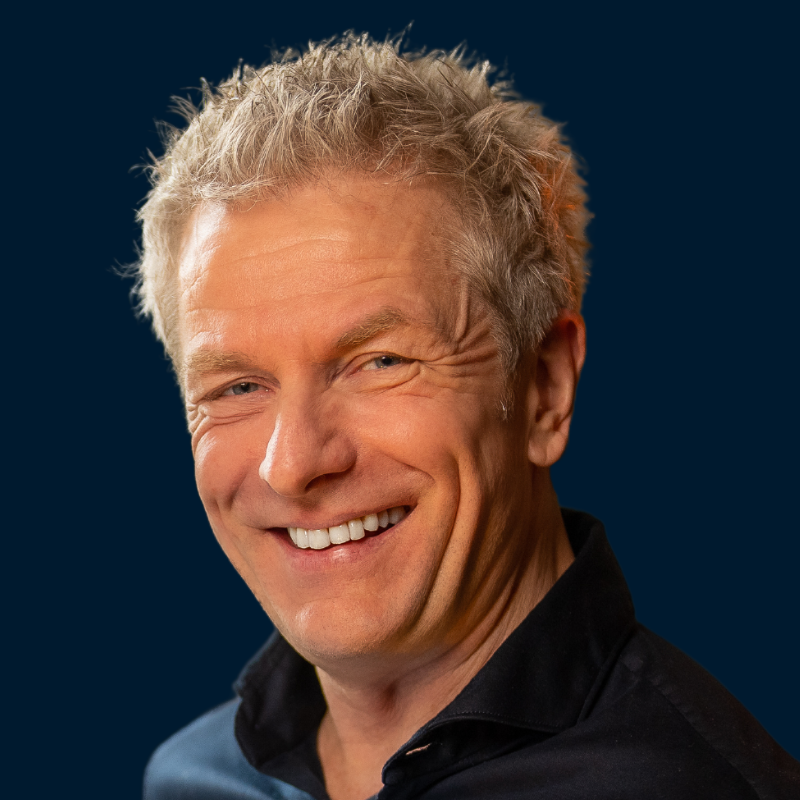
Andreas Enrico Brell is a leading Money mindset coach in the German-speaking world. For over 10 years, he's been guiding self-employed people and entrepreneurs out of the mental hamster wheel and old beliefs toward more clarity, more focus, and self-determination. His personal method is based on more than 30 years of his own entrepreneurial practice and insights from psychology and neuroscience. He's the author of several books on Money Mindset, his expertise is regularly quoted in professional media, and he's considered a Top 10 finance trainer in the German-speaking world. On the podcast "SELBSTBESTIMMT KANN ICH" he shares tried-and-tested strategies for holistic success every week.
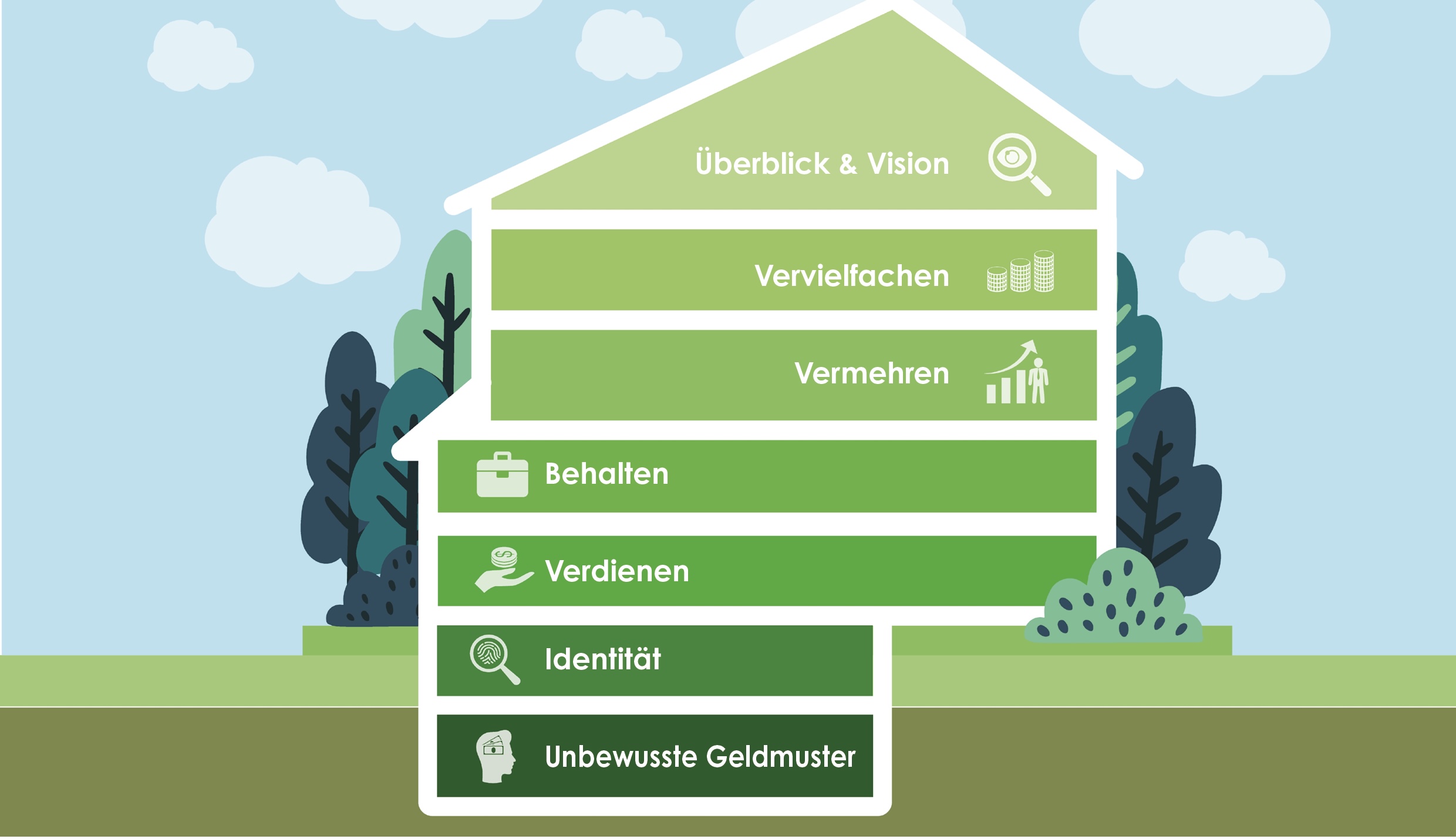
The House of Money
– The money-psychological architecture of your life
In over a decade of working with self-employed people and entrepreneurs, I've noticed: people with the same education, the same opportunities, the same starting conditions create totally different financial realities.
The difference isn't somewhere on the outside. It's in your inner attitude – in what I call the House of Money.
Imagine your financial life is a house with seven levels, from the foundation to the roof. Each level has its own money-psychological function. And if you know your money type, you can build high, because your house is built to last.
The foundation is your identity – who you are when it comes to money. This is where inner security or constant wobbling comes from. Here you'll find answers to questions like: Am I worth being well paid? Am I allowed to experience abundance? Or even get rich? Do I feel safe when I'm visibly successful? Without a stable foundation, every financial decision is driven by fear instead of clarity.
The basement holds your unconscious money patterns – all the imprints, family sayings, and experiences you never consciously chose. This is where your emotional money logic is buried. Your money type explains why you do what you do, even if it doesn't make sense rationally: why you work for too little, why you downplay your successes, why you overthink or avoid good opportunities.
Above that are the practical levels that we literally see every day. I call them the 4 levels of money. Unlike in a game, where you have to reach the next level, you can move freely in the House of Money and set up each floor however you want.
Here are the 4 levels from the ground floor up to the third floor: Earning, Keeping, Growing, Multiplying.
- Earning: How money even comes to you.
- Keeping: Whether and how long money stays with you.
- Growing: Whether and how well money works for you.
- Multiplying: How you create income streams from systems, structures, and assets that generate income independent of your time.
Level 1: Earning money
This is the level where most people spend their whole lives. It's all about generating income in the first place. You trade time for money. As long as your income is directly tied to your time, you're trapped. You can't get sick. You can't take a break. You can't scale. Your limit is your available time, which is limited.
Level 2: Keeping money
This is where financial intelligence starts. It's not just about earning money anymore – it's about keeping it available, managing it, and steering it consciously. You learn to tell the difference between income and expenses. You start tracking. You create structure in accounts, budgets, and reserves. Without the ability to keep money, you'll never build wealth. You can earn millions – but if you can't keep it, nothing changes. Level 2 is the difference between "earning well" and "being financially stable."
Level 3: Growing money
On this floor, you learn to grow money through leverage, value creation, and smart decisions. You start investing – not blindly, not following YouTube tips, but in a way that fits your personality, your investor type, your personal money type. You realize: not every investment makes sense for everyone, not every trend is a trend. This level is important because saving alone will never set you free. Inflation eats up your reserves. Only when your money really works for you do you create growth. Level 3 is the difference between "stable" and "growing."
Level 4: Multiplying money
This level stands for financial mastery. Here, you build wealth that keeps growing even when you're not putting in your own time. You create multiple streams of income. You set up systems, assets, and structures that work while you sleep. You're no longer just a player in the game – you're the architect. Global wealth studies all agree: The higher your wealth, the bigger the share of entrepreneurial activity. So your chances of being financially free increases significantly if you build a profitable business model with different sources. Real freedom, though, doesn't just mean having lots of money. It means you can do whatever you want, whenever you want, and money still flows to you from different places, without you always having to trade your life for it. Level 4 is the difference between being "successful" and being "free".
Every level, every floor needs different skills, a different mindset, a different kind of inner maturity. If you’re always stuck on the ground floor just “earning” but can’t budget, you’ll never feel truly stable. If you only save but never grow your wealth, you’ll stay stuck in defensive fear. If you invest without knowing your inner architecture, you’ll create more stress than freedom.
The roof ties everything together: financial foresight, long-term focus, real freedom, and the ability to see all the way to the horizon. The skill to make clear decisions without being ruled by pressure, fear, or doubt. Here, you make choices out of self-determination, not out of lack.
Most people try to build in the roof window while the basement floor isn’t even dry yet and their foundation is crumbling. They read books, take courses, try out strategies – but the house still shakes.
At its core, that means: Money follows personality.
That’s the essence of over 30 years of entrepreneurial experience and a decade of deep coaching work. It’s not your business model, not your strategy, not your product that mainly decides how much money comes your way – it’s who you’ve become inside when it comes to money.
Personality builds from the bottom up, from the inside out. Wealth is what you’re capable of. Level by level, with patience, awareness, and the willingness to meet yourself honestly and become the person you truly are inside.

The Money Temperature – Your Emotional Comfort Zone
The key to your growth lies in that ever-popular comfort zone.
In my experience, everyone has an emotional comfort zone for money. It’s like an inner temperature that decides how much abundance, security, or risk you can handle, what feels good to you – whether it’s sales, income, wealth, or just the cash you carry around.
This comfort temperature isn’t what you wish for or what you logically think makes sense. It’s what your nervous system feels safe and familiar with. Your inner “this is normal for me.”
Take a look at your average bank balance or monthly revenue from the last 12 months. That’s not random. That’s your emotional set point – the financial range your nervous system has calibrated as “normal.”
As soon as you go above this temperature, something weird happens: you suddenly spend more. You look for new projects. You invest without thinking. You put off decisions. Something always happens that brings you back. Your subconscious is desperately trying to get you back to “normal.”
If you drop below “normal,” panic sets in: you get tense inside, start saving obsessively, doubt everything, lose your courage and creativity. Your nervous system locks up and switches to survival mode. From that tight place, you rarely make the decisions that will lead you to freedom in the long run.
A therapist once told me: “Every time my bank balance goes way over 15,000 euros, something happens. The car breaks down. I randomly sign up for some pointless, way-too-expensive training. Something always brings me back to 15,000.” It wasn’t a coincidence. It was her comfort temperature at work, keeping her at a certain level.
FINANCIAL SELF-DETERMINATION DOESN'T START WHEN YOU EARN MORE MONEY. IT STARTS WHEN YOU FEEL COMFORTABLE WITH MORE ABUNDANCE, WITHOUT YOUR NERVOUS SYSTEM FREAKING OUT.
The money temperature shows you where you’re emotionally connected to money. And it shows you where you keep limiting yourself – not out of laziness, not because you can’t, but out of unconscious loyalty to an old feeling of safety.
The First Steps to a New Relationship with Money
Over three decades, I’ve developed and refined methods based on one simple insight: You can’t change your outer reality for good without changing your inner perception.
If a limiting belief is blocking you, don’t just change the belief – change the frame you see it in, and repeat new beliefs until your new self has won the inner ping-pong match of “You can’t do it – Oh yes I can.”
If parts of you are in conflict, let them talk to each other. If your head is in charge and your heart never gets a say, find a way to access your intuition. If old wounds are still hurting, learn to forgive yourself and others.
If you feel fear in money situations, anchor a powerful state. If your language keeps you small, notice it and change it consistently. So you can use these tools on your journey, let’s talk about where this path leads and if it’s worth it for you.
Money is a mirror.
This mirror doesn’t show how much you’re worth – it shows how willing you are to live your true value. When you heal your relationship with money, you heal the part of you that’s played small and counted pennies for too long. And that’s exactly where financial health starts. Not in your bank account. But inside you.
Suddenly you realize that money itself is neutral. You can make it your enemy or your friend. You can serve money by chasing after it, like most people do. You can reject money, and then it goes where it’s welcome. But it’s way better and easier to learn to attract money by taking care of it lovingly, like it’s a good friend. Money is supportive when you build a healthy relationship with it.
Destination: Self-determined
– Your script for a life, that you’re really living
Imagine you’re rewriting your money script and looking three years into the future. Really feel into it:
You wake up – and your first thought isn’t “What do I have to get done today?” but “What do I want to create today, what am I excited about?”
Your body feels soft, not tense. It’s like you’re standing on solid ground that holds everything. A foundation that doesn’t shake. You take a deep breath, and for the first time in years, the air goes all the way down. No tightness in your chest. No knot in your stomach. A morning that doesn’t start with fear, but with space.
You’re not making decisions just to survive anymore. You’re making them to create. You’re in the driver’s seat of your life – not your bank balance, not your fear. You.
You’ve created an inner certainty that money is a tool that serves you and is always a true friend. An inner switch has flipped: “I’m back at the helm, I steer my own life.”

You’re no longer standing on the sidelines. You’re right in the middle of your own movie. You notice how you make decisions, how you talk about money, how you handle mistakes, grab opportunities, and grow.
Emotionally: Calm. Confident. Connected to your own power. Free from old “I’m not allowed” scripts. The shame is gone. The pressure is gone. The fear of not having enough is gone.
In your identity, you’ve become the person for whom clarity, focus, and taking action are just normal. No exceptions. You’re not just running your business better. You’re leading yourself better. Your house stands strong. Your temperature has risen. You’ve grown.
That’s the destination.
A life where money gives you security, makes independence possible, opens up freedom, and makes self-determination rock solid.
A life where you wake up in the morning and think: “I have space. I have choices. I am safe.” A life where you make decisions from clarity, not from lack. A life full of ease. A life full of possibilities.
A life you truly decide for yourself.
This life doesn't start with more money. It starts with healing your relationship with money.
Your Decision
At this moment, you have two options:
You can read this article, nod along inside, maybe highlight a few passages – and then just keep going like before. Back to the old state, the usual patterns, the familiar relationship with money.
Or you can, today, in the next 48 hours, make the first decision that changes everything.
This is the moment when something shifts.
Not dramatic. Not loud. But deep. Because if you wait until you “feel ready,” you’ll be waiting forever. Readiness doesn’t come before the action. It arises through the action.
You're no longer standing on the sidelines of the scene of your own life. You're right in the middle of it. You realize, how you make decisions. How you talk about money. How you hold yourself back – and how you can realign yourself.
Once this new script is written, something fundamental changes: Stability through inner strength becomes your everyday. Clarity becomes the norm. Self-respect becomes tangible. And with that, the thing that makes the biggest difference in the long run shows up: Independence. Freedom. Living life on your own terms.
A healthy relationship with money is the key to getting there.
And that key is already in your hand.
You just have to flip it around.
Andreas Enrico Brell ist führender Money Mindset Coach im deutschsprachigen Raum.