

 DE
 ES
 RU
 FR
 ZH
 HI
 GR


The Mandela Strategy
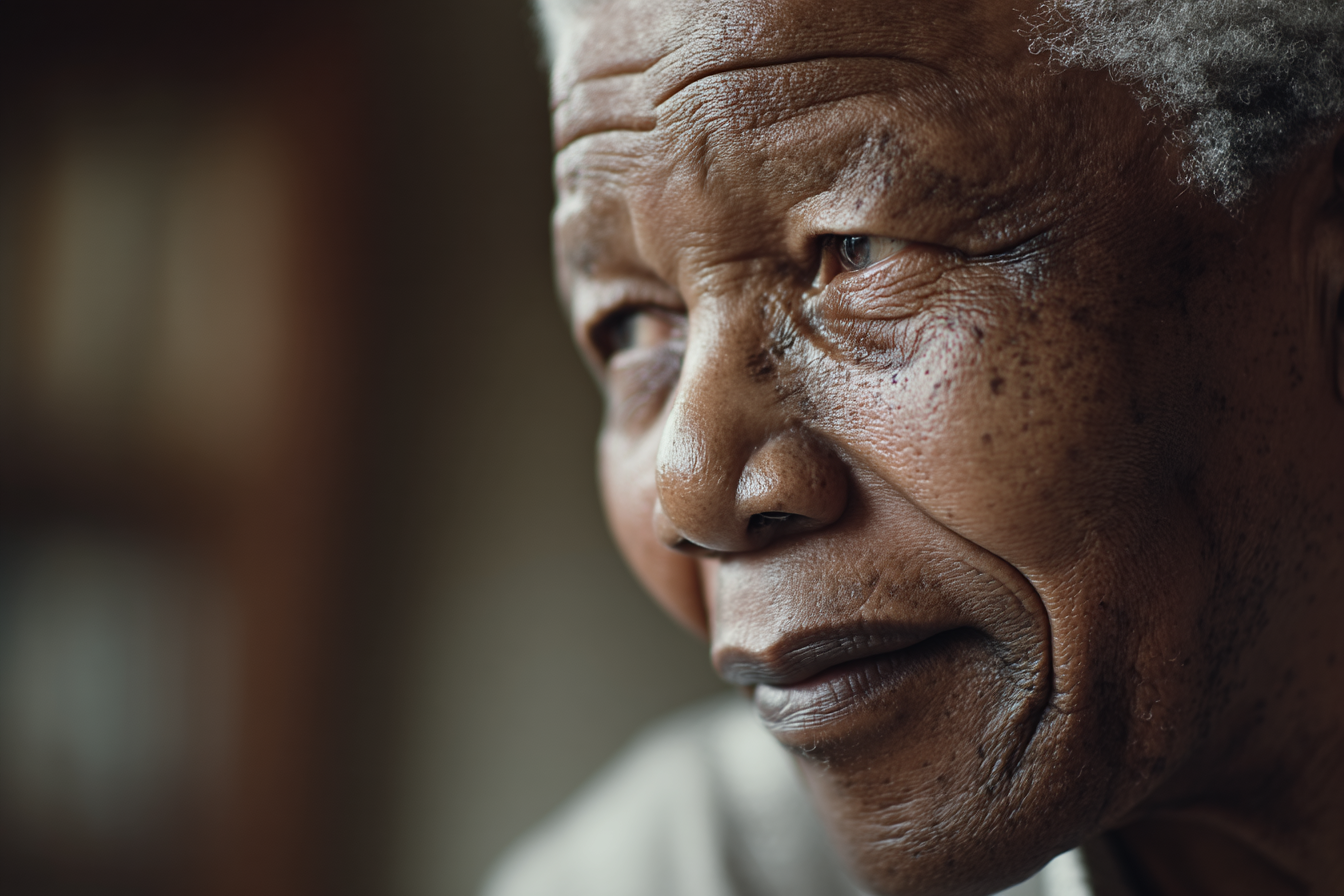
Inner freedom and forgiveness despite outer lack of freedom
This article shows you how Nelson Mandela’s inner attitude made peace, clarity, and strength possible even when he wasn’t free on the outside. The Mandela Strategy helps you consciously choose your perception, meaning, state, identity, and forgiveness. It’s an invitation to not let the outside world control you – and to reclaim your inner freedom.
The essence of inner freedom
For many, Nelson Mandela is a symbol of peace and dignity. For me, he’s always been a hero in my life. What made him special wasn’t just his political work – it was his inner attitude.
In this article, I present his inner attitude like an NLP strategy. This strategy basically describes the ability to put awareness above reaction. It’s about an inner process that lets you keep your peace and strength, even when the outside world is going crazy.
The person behind the legend
Nelson Rolihlahla Mandela was born in 1918 in the South African village of Mvezo – in a world shaped by segregation. He studied law, fought against apartheid, was arrested, and spent 27 years in prison. But none of that took away his humanity.
When he was released in 1990, the world expected a broken man. Instead, Mandela stepped out calm, dignified, and with a message of reconciliation. He didn’t speak with bitterness, but with heart, clarity, and forgiveness.
Four years later, he became the first black president of South Africa – elected by a people who had been oppressed for decades.
Mandela as a model for inner mastery
Mandela wasn’t an NLPer, but he lived a lot of the principles that are central in NLP:
- Managing your state (State Management)
- Reframing meanings
- Thinking from different perspectives
- Putting identity above situation
- Taking responsibility for your inner processes
If we model Mandela’s life, we discover a mental and emotional structure that’s universally applicable – to conflicts, relationships, leadership, healing, and personal growth. The Mandela Strategy is an example of modern NLP modeling: It wasn’t behavior that was studied, but awareness – the path from pain to dignity.

NELSON MANDELA – PERSONALITY IN FIVE FACETS
Nelson Mandela was a man shaped not just by his experiences, but by the choices he made despite them. People who met him spoke of a quiet strength that came less from words and more from his attitude.
1. HIS QUIET DISCIPLINE
Mandela wasn’t an impulsive person. He was structured, reflective, and calm within himself. During his imprisonment, he did daily rituals – physically, mentally, and emotionally. Even fellow prisoners later said that this discipline carried them and gave them dignity.
2. HIS ABILITY TO LISTEN
Many political giants are great speakers. Mandela was a great listener. He understood that people make peace when they feel understood. He even listened to people who thought differently, not to agree, but to understand.
3. HIS DEEP HUMILITY
Even though he was admired all over the world, Mandela stayed someone who could laugh at himself. He joked about his age, loved telling stories, and openly admitted his mistakes. This humility wasn’t just for show – it was a sign of real inner confidence.
4. HIS COURAGE TO BE VULNERABLE
A lot of brave people seem tough. Mandela was brave and gentle. He talked about loneliness, doubts, and moments of fear. That’s exactly what made him so believable: he never hid his humanity.
5. HIS UNCOMPROMISING BELIEF IN THE GOOD
Mandela was a realist, but never a cynic. He knew how brutal people could be – and still believed in their potential for kindness. This belief wasn’t wishful thinking, it was a choice he made again and again, every single day.
"I'm an optimist. It just feels like there's no other option." These five sides make it clear why Mandela touched so many people. He was a leader who showed strength without needing to be harsh – and brought peace because he found it in himself first.
The 5 steps of the Mandela Strategy
1. NOTICE WHAT IS – WITHOUT JUDGING
Mandela saw reality clearly: "I'm in prison." But he didn’t get lost in that role. He noticed it, but didn’t get stuck on it. Mandela accepted what was. He didn’t deny he was locked up – but he didn’t let that situation define who he was: "I was a prisoner, but never a victim."
NLP reference: Dissociation – take perception position 3, get some distance, and look at things as a neutral observer instead of getting sucked into the problem.
2. FIND MEANING – THE WHY BEHIND THE SUFFERING
Mandela gave his years in prison meaning. He asked himself, "What can I use this time for?" He studied, meditated, wrote letters – and got himself ready inside for what would come after prison. He told himself that this time would make him into the person he could be later. "These years aren’t wasted. I’m growing, I’m understanding, I’m serving a bigger cause."
NLP element: Reframing and logical levels – pain gets a new meaning when you put it in a bigger context.
3. MANAGE YOUR STATE – CULTIVATE INNER CALM
Every morning he got up, exercised, meditated, wrote letters. That’s how he practiced self-control every day: posture, breathing, presence. He chose on purpose what state he wanted to live in.
NLP element: State management – consciously creating and stabilizing feelings. He chose to intentionally activate calm, dignity, and determination.
4. CHOOSE YOUR IDENTITY – BE BIGGER THAN THE SITUATION
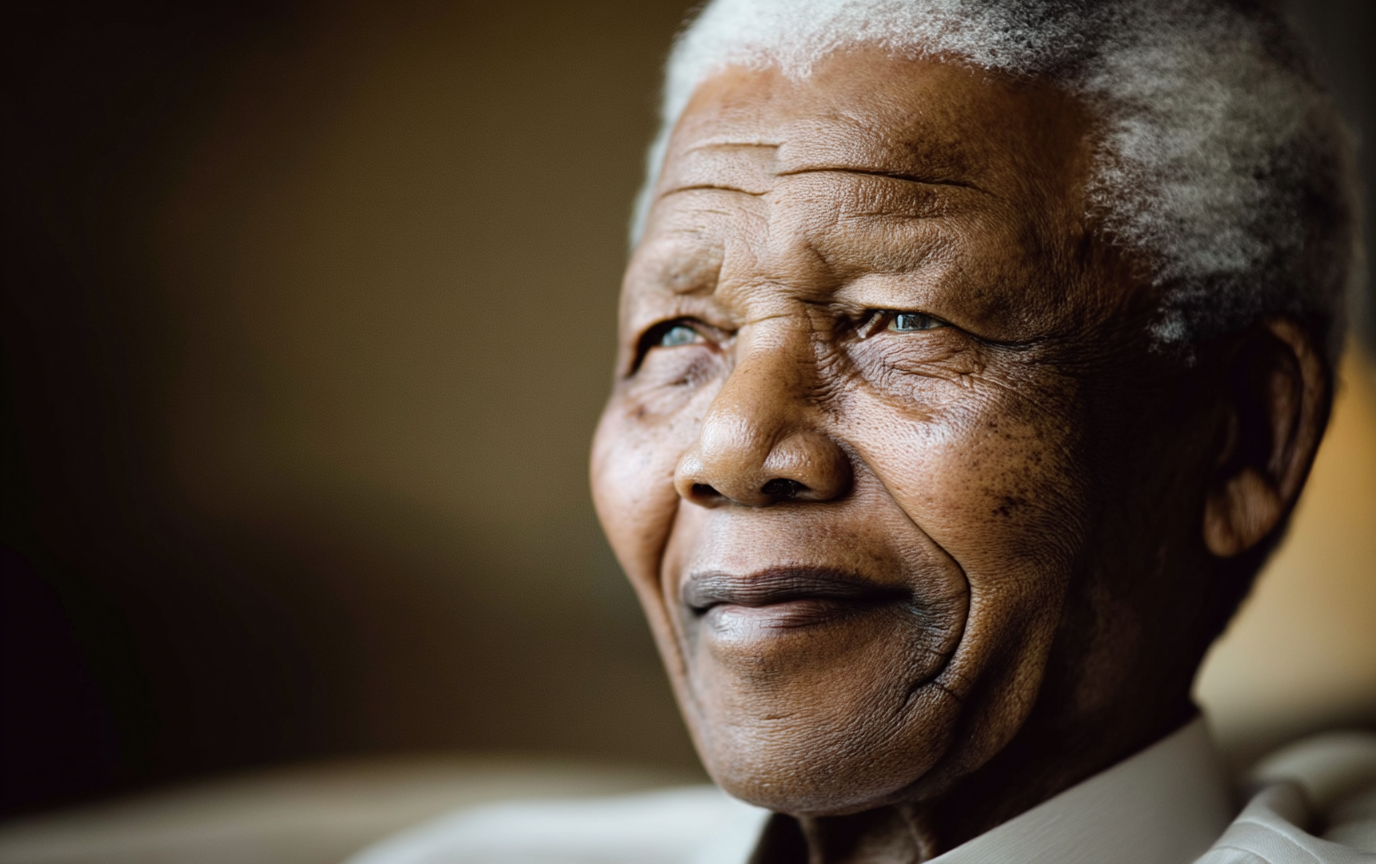
Mandela didn’t define himself as a prisoner, but as the future leader of a free South Africa. He wasn’t a captive, but the leader and servant of his people. He saw himself as part of a mission, not a victim of a system. This identity shaped how he thought and acted. "You can lock me up, but not my mind."
NLP reference: Logical levels – from environment and behavior to values, identity, and mission. Identity reframing – when you know who you are, the outside world loses its power.
5. FORGIVE AND TAKE RESPONSIBILITY
Mandela said: "Forgiveness frees the soul. It takes away fear. That’s why it’s so powerful." He decided not to let the past define him. That’s how he became free – inside and out. For Mandela, forgiveness wasn’t weakness, it was the highest form of strength. He didn’t choose it because others deserved it – but because he wanted to be free.
NLP reference: Reimprinting, timeline work, parts integration → Emotional rewiring of the past – reorganizing your inner story – from trauma to wisdom.
THE STRATEGY AT A GLANCE
- PERCEPTION
- GIVE MEANING
- STATE CONTROL
- CHOOSE IDENTITY
- FORGIVING & ACTING
This sequence follows a clear inner logic: from the outside to the inside, from stimulus to meaning, from reacting to shaping.
IN SHORT, SYMBOLICALLY:
D R Z I V
(Dissociation → Reframing → State → Identity → Forgiveness)
The attitude behind it: Mandela embodied something that goes way beyond mental techniques: a conscious decision for humanity. In NLP we see this attitude as self-mastery – the ability to choose your state, no matter what’s happening outside.
The Mandela moment
An exercise for everyday life
A 10-minute process for forgiveness and self-leadership
1. NOTICE
Think of a situation that hurt you. Allow yourself to notice it without judging it.
2. FIND MEANING
Take a step back and ask yourself: "What could this have been good for?" What did it teach you, how did it make you stronger? Is there a quality you’re developing through this experience?
3. CHOOSE YOUR STATE
Breathe calmly. Straighten up inside. Feel that you’re bigger than the problem. Feel the dignity of someone who decides for themselves who they are.
4. FORMULATE YOUR IDENTITY
Say to yourself: “I am someone who chooses peace.”
5. FORGIVENESS
Let go. Not because the other person deserves it – but because you want to be free. Say to yourself: “I release you from my story. I am free.” Stay quiet for a moment. Breathe. Feel peace.
Application in coaching and training
The Mandela strategy is super helpful when someone:
- feels like a victim of external circumstances,
- can’t let go of old wounds,
- wants to be a leader in tough times,
- or wants to find inner freedom even under pressure.
You can use it for:
- working through old wounds
- transformation processes after crises
- leadership coaching for values and responsibility
- team conflicts – when old emotions need to be released
- self-leadership and resilience work
- forgiveness and self-worth topics
It takes people from “Why is this happening to me?” to “What can I learn from this – and who do I want to be now?”
Application in coaching
A typical exercise for this:
- Let the person experience the tough situation as if they’re in it.
- Then guide them into a dissociated perspective (like a bird’s-eye view).
- Find the meaning or the lesson in it.
- Strengthen the state of calm and dignity (anchor it).
- Formulate an identity statement: “I am someone who chooses peace.”
- Allow conscious forgiveness – not because the other person deserves it, but because you want to be free.
Historical echo
When Mandela became president in 1994, he started his term with a gesture: he invited his former prison guards to his inauguration.
He said: “Courage is not the absence of fear, but the triumph over it.”
This attitude made him an icon of human greatness – and a living example of how awareness brings healing.
Essence
The Mandela strategy is more than just a method. It’s an invitation to take back the power over your own experience – no matter what’s happening outside. It shows that NLP isn’t just about communication tools, but also about finding your own inner freedom.
Freedom doesn’t start with open gates, but with an open heart. And true greatness happens when someone says: “I choose my state – no matter what’s going on around me.”
“AS I WALKED THROUGH THE GATE TOWARD FREEDOM, I KNEW: IF I DIDN’T LEAVE THE HATRED BEHIND ME, I’D STAY IN PRISON.”
— NELSON MANDELA

Stephan Landsiedel is a diploma psychologist and NLP trainer.