

 DE
 ES
 RU
 FR
 ZH
 HI
 GR


The NLP Cases of Creative Consultant Julius Frei
Episode 3: The Missing Claim
In our short stories, we take you along in a creative way and show you how NLP can be used in real life. In the last two cases (issues 01 and 02), Julius Frei already solved some exciting cases, and today it continues...
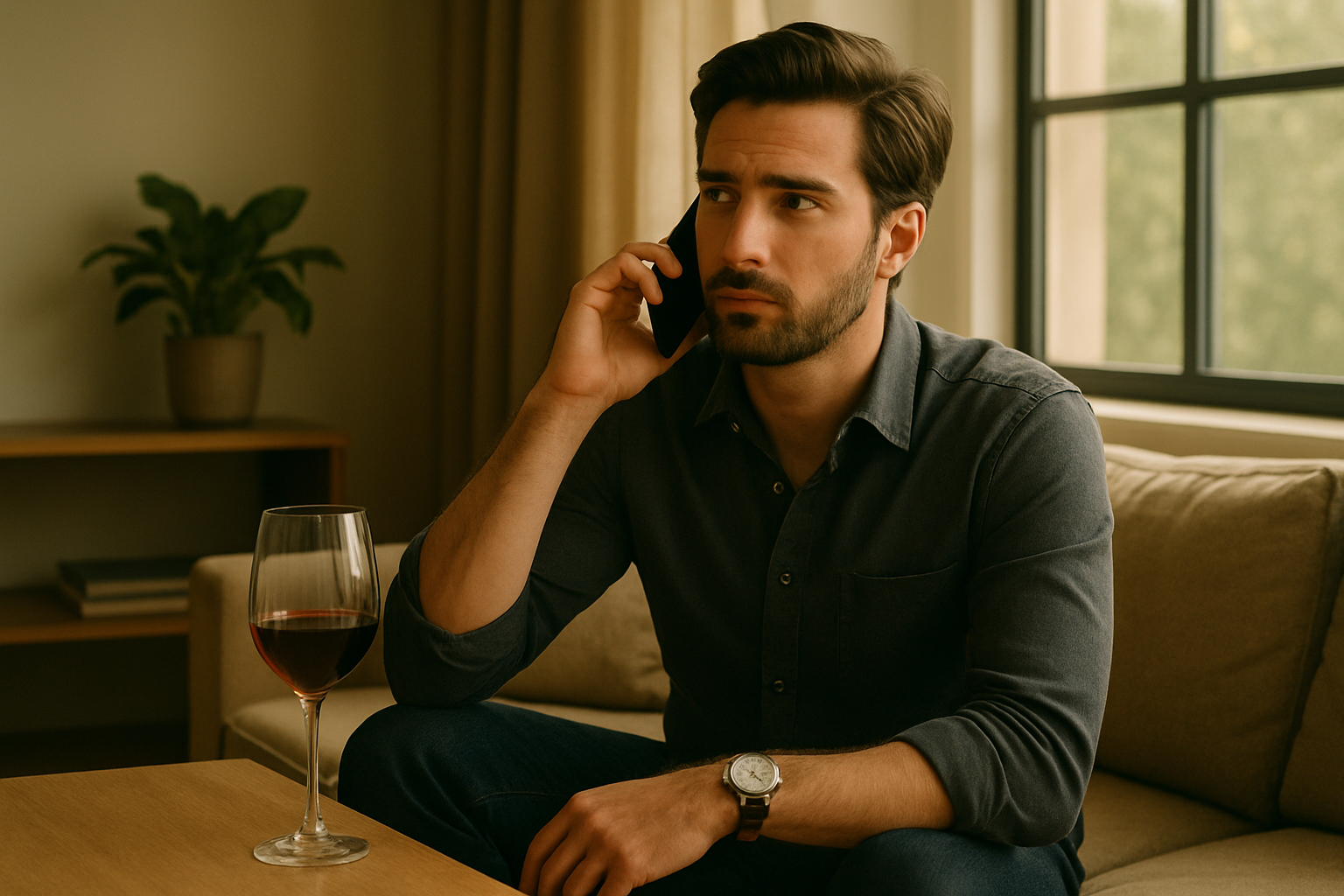
The call came on a Tuesday evening. Julius had just poured himself a glass of red wine when his phone vibrated. It was an unknown number from Hamburg. "Mr. Frei? Isabelle Martens here. I lead the branding team at ReNova. We... have a problem. It's about our slogan. It doesn't work anymore." ReNova was a big name in sustainable household products.
Their slogan "Live naturally clean" had burned itself into people's minds over the years. And now—nothing. No reaction. No feedback. No inner movement. Just emptiness.
"It doesn't trigger anything anymore," said Isabelle. Her voice sounded like she'd had to explain this a few times already. "No more resonance in the team. No images. No emotions."
The slogan "Live naturally clean" had become like an empty frame. The words were still there—but without meaning. Julius knew: When language stops working, it's rarely because of the words themselves.
Julius closed his eyes. He'd listened carefully to build rapport. Now he asked, "Do you want a new slogan?" Isabelle hesitated for a moment: "Maybe. We don't know." "Maybe we can bring the old one back to life, if that's what you want," Julius replied. "That would be wonderful!"
At that moment, Julius had an idea where to start. He'd go into this project with the mindset that revival is possible. Through targeted questions and visualizations, he'll help the team make this future tangible and imply a positive outlook. (Future Pacing)
He quickly asked about tomorrow's time slot—and then ended the call. But inside, a different conversation was already going on. How did a slogan that once carried so much meaning lose its impact? Was the team no longer connected to its story? Or had the world changed so much that the language had to change too? He jotted down a quick note. Not about the slogan. But about the feeling he heard in Isabelle's voice: alienation.
The next morning, he'd head to Hamburg. But not just to talk about words. He wanted to hear what had disappeared between them.
The sentence on the wall
The ReNova headquarters was on the edge of Hamburg's HafenCity—modern, minimalist, lots of glass, lots of light. Julius got out of the taxi and looked at the building for a moment. Architecture like a promise: clear, sustainable, aesthetically aware. But how often had he learned that the real state of a company wasn't made of glass and steel, but of words and glances?
At reception, he was already expected. An assistant led him through the open workspace on the first floor. Wooden furniture, living plant walls, acoustically pleasant room dividers—everything stylish, well thought out. And yet he felt it right away: that subtle tension in the air. Not enough laughter. Too much silence between the steps. (Technique: Calibrating—perceiving unconscious signals and atmosphere)
Before the team meeting was about to start, Julius asked if he could walk through the building alone for a bit. Isabelle showed him a hallway that led to the showroom of the last campaigns—a kind of gallery of past brand messages.
There it was: "Live naturally clean." Big, printed in white on natural linen, behind plexiglass. Underneath, a photo: a happy family at the breakfast table, organic bread, wooden chair, pastel colors, a kid smiling at the camera. Everything looked... proper.
Julius stepped closer. Stopped. Said nothing. A sentence isn't just text. It's a space for resonance. Julius checked in with himself. No resistance, no cynicism. But also no echo. It felt like he was trying to have a conversation with a photograph. He spoke softly, more to himself: "You used to be a promise. And now you're just a page on the calendar." He kept walking. Behind glass, another image: the same words, this time on a packaging. The colors were soft. The typography minimal. All very professional. But also distant.
Then he stopped. In a corner stood an old cardboard cutout from the early days: a young guy, sporty, holding a ReNova cleaning product, next to him in fresh handwriting: "Live naturally clean – for people who love responsibility." Julius smiled. The sentence was overloaded, sure. But it was alive. Not a slogan – a statement. And that's exactly what's missing today. (Timeline work – comparing past and present to make emotional development visible)
When he stepped back into the daylight, something had become clear to him: The slogan hadn't died because the world had changed. It died because its heart had been taken away. The responsibility, the emotion, the "why" – it had all disappeared into strategy papers, social media templates, and way too many rounds of approvals. And that's exactly where he'd start.
The team meeting
As they walked into the meeting room, Julius saw the core team already gathered around the big table:
- Isabelle Martens, head of branding, early 40s, confident, but with tired eyes.
- Dennis, the creative director—bearded, cool, but with his arms crossed and the look of a man who just defended his ideas.
- Ronja, the copywriter – maybe mid-thirties, full of energy, but restless, her fingers tapping quietly on the edge of the table.
Julius walked in, let his gaze calmly sweep over everyone, greeted them with a quick nod. No papers, no laptop – just being present. "Welcome, Mr. Frei," said Isabelle. "Julius, please." He shook her hand. "Thanks for inviting me."
He turned to the others. "I'm not here to write a new slogan. I'm here to find out why the old one doesn't speak to you anymore." (Reframing – understanding the problem not as a mistake, but as a signal.)
Silence. Ronja stopped tapping. "Sometimes," Julius continued, "a sentence doesn't tell us what it used to – not because it's wrong, but because something inside us has changed. My job is to figure out what changed." He let the sentence hang in the air. No PowerPoint. No whiteboard. Just space.
Dennis leaned back. Isabelle let out a quiet breath. And for the first time, she seemed to feel like someone had actually come to listen.
"Before we think about anything new," he began, "I want to talk with you about what was. I just saw your old slogan – in the gallery, on a poster, on a cardboard standee. And I'm asking you: When was the last time it sparked something in you?" Silence. Then Ronja, the copywriter, said quietly: "Back then. In the early years... it was like our motto. I felt like we were really telling something meaningful." "And when did you stop feeling that way?" (Timeline question, emotional rewind)
"When we started just going through the motions," Dennis chimed in. "It was slapped on everything. But at some point, no one asked why anymore." Julius nodded. "A slogan is like a song. If you sing it too often without feeling, it eventually goes silent." He let a short pause happen. Then: "I'd like each of you to close your eyes for a moment now. Only if that's okay for you." (Technique: trance induction)
Some hesitated, but in the end, everyone joined in. "Imagine: It's your first day at ReNova again. You walk in, fresh, curious, motivated. You hear the slogan: Live naturally clean. And something inside you goes: Yes! What exactly was that? What did that sentence mean to you back then?" (Technique: Reactivating positive states on the timeline)
Slowly, people started to speak up. "Responsibility," said Isabelle. "Transparency," whispered Ronja. "A counterweight to the plastic age," said Dennis.
Julius opened his eyes, looked around the group. "You didn't lose the sentence because it was bad. You lost it because your connection to it faded." (Technique: Reframing – the problem isn't a mistake, it's a forgotten connection.)
"I want to talk to each of you one-on-one today," he continued. "But for now, this is enough for me: Your slogan isn't dead. It's just sleeping. And maybe it'll wake up in a new form – or it'll make room for something stronger, because it comes from you today." The room stayed quiet. But this time, it wasn't a tense silence, it was an expectant one. The first question had been asked. The first doors opened.
Conversation with Ronja
After a short pause, Julius went to Ronja first. She was sitting in a corner of her office with an oat milk cappuccino and a checkered notebook. Julius grabbed a black coffee and just sat down with her. No words. Just a smile and a curious look.
She looked him over for a moment, then said, "I don't write slogans anymore. I just write compromises now." Julius didn't react right away. He took a sip of his coffee. Then: "So, why did you actually start writing copy?" (Technique: activating values by going back to the original motivation)
Ronja looked up. Her gaze was soft, but tired. "Because of my grandma. She always had a slogan for everything. It was always about a happy, beautiful, successful time. I loved that. I thought: advertising can give people hope." "And what does it do today?" Julius asked quietly. "It makes processes. Spreadsheets. 'Value propositions.' And slogans that sound like ten people were scared to say too much."
Julius didn't pick up on that directly. Instead, he just let the words sink in. Then: "Maybe you didn't become too quiet – maybe you just got too loud for a system that's too scared to sound honest." Ronja looked at him, surprised. A moment of confusion – then a quick, genuine laugh. "That's the nicest kick in the ass I've ever gotten." Julius nodded. "I want you to try something today. Not for the team. Not for the client. Just for you." "What?" "Write the claim you wish you'd had as a teenager. One that would've gotten you out of bed in the morning. No compromise. No approval. Just you." (Technique: Reframing & Timeline – tapping into an earlier version of herself)
Ronja looked at her notebook. Then at him. "That's not gonna fit into the mold." "That's exactly the point."
Conversation with Dennis
Dennis sat at his desk, the table in front of him a controlled chaos of sketches, pens, layouts. Julius didn't walk up to him right away. He stood there, letting his eyes wander over the designs. Then he picked up one of the drafts from the edge – a strong, clear image: An older woman with wrinkled skin, holding a ReNova product in her hand. No filter. No smile. Just presence.
"Yours?" Julius asked. Dennis looked up for a second. Hesitated. Then nodded. "It was meant for packaging once. Never made it through." "Why not?" "Too rough. Too real. Not enough pastel." He laughed, but it sounded bitter.
Julius sat down across from him. He gently placed the draft on the table. "And you did it anyway." Dennis shrugged. "Because I believed that's what ReNova used to be. Not a glossy world. But... truth, beautifully done." "What's the opposite of 'Living naturally clean' for you?" Dennis looked at him. Then he said, "Facade." Julius nodded. Waited a moment. "You're not cynical, Dennis. You're disappointed." A brief moment of stillness. Then a smile appeared on Dennis' face – small, but real. "Maybe both."
"I saw your picture. And what's in it isn't just a design choice. It's attitude." Dennis leaned back. "Attitude doesn't win you any pitches these days." "But maybe it'll bring back the respect you miss yourself." (Technique: Meta-Model – Julius questions Dennis' generalization "Attitude doesn't get you anything these days" to break up fixed thought patterns.) Silence.
"I've got something planned with the team today," Julius said. "Something that looks back at what ReNova used to be. What you once saw in it." He stood up, turned to the door. Then he stopped again. "Show me a design where you'd say: That was the moment when ReNova still felt like ReNova to you. Just for you. Not for the pitch. Not for the meeting." Dennis nodded slowly. "I think I already know which one I mean. It's right at the bottom of the folder."
The workshop: Reconnection
The big meeting room had been rearranged. No tables, no laptops. Just a circle of chairs, flipcharts on the walls, a small table in the middle with colorful moderation cards, pens, an hourglass, and Simone and Maria, two interns, had joined as well.
Julius stepped into the middle. "Today we're not doing a creative workshop. We're doing a memory workshop." Some looked up, surprised. Isabelle looked at him, curious. Ronja had her notebook on her knees, Dennis was holding a coffee in his hand like it was his last bit of armor.
"I don't think your claim has lost its meaning. You've just lost touch with what made it meaningful in the first place. And that's what we're going to find again today." He reached for the flipchart. Wrote in big letters: What do we stand for?
Then he turned around. "Not what you want to communicate. But what you truly believe, deep down, that ReNova should stand for. I want you to pair up now. Each of you tell the other: Why are you actually here? Why ReNova, of all places? And what once excited you about it?" (Technique: Values work & Reframing – referring back to original motivations to break through current blocks.)
The room filled with quiet conversations. Laughter. Sometimes someone paused. It wasn't a brainstorming session. It was like going back together to a source many thought had dried up. After fifteen minutes, Julius asked for feedback.
Ronja was the first: "I started at ReNova back then because I thought: This isn't just a brand, it's an attitude. Sustainability not as a label, but as a commitment." Dennis added: "Because I felt like we were making the world a little cleaner. Not just with products, but with what we show." Isabelle said calmly: "Because I wanted my kid to see ads that are genuine someday." Julius nodded.
Then he reached for the flipchart again. Wrote: Which of these is still alive? Silence. "Which of that lives on in your claim? And what's missing for it to sound real again?" He let the room sink in. Then he said: "I'm going to ask each of you to write a new version now. Not perfect, not final. Just a sketch. Kind of like a conversation with your original idea. If you had one sentence that could carry your attitude as a feeling—what would it be?" (Technique: Timeline technique & future pacing—creating a new form for the future from the past.)
Ronja was the first to start writing. Dennis hesitated, but then grabbed a marker too. Isabelle closed her eyes for a moment. Then she started writing as well. Julius stepped aside, gave them space. He knew: Sometimes new things don't come from inventing, but from remembering.
Two hours later, the branding team gathered again in the creative room. No tables, just floor cushions, magnetic boards, lots of space. Julius started without much fuss: "Now we're not writing claims. Now we're talking about attitudes. About what matters to you—as a person. Not as a brand rep." (Technique: Reframing the task—from claim to attitude)
The new pitch
Two days later. Conference room West, tenth floor. The air was filtered, the windows cleaned, the coffee mediocre. But something was different: The team seemed awake. Clearer. More approachable.
This time, the CEO of the ReNova Group was also at the table—a stylish man in his early fifties with an attentive look, not easily impressed. Julius wasn't up front. He sat. In the circle. He left the stage to the team.
Isabelle opened briefly, no slides, no corporate lingo. Then Ronja stepped forward. She showed a new collage. No product. No slogan. Just scenes.
- A woman walking with her child through an apple orchard.
- A man sanding down an old dresser – pride in his eyes.
- A shared kitchen with dishes that aren't perfectly clean, but lovingly used.
"That," Ronja said calmly, "is the life we want to help shape." She switched to the next slide: A simple label on a ReNova bottle. On it, in white letters: Live naturally clean. Because we mean what we say.
The CEO leaned forward. "Is that... the new tagline?" Dennis replied, "No. That's our old one. But this time, it comes from us. Not from the market." (Technique: Reframing – The tagline stays, but its meaning gets a fresh life)
A long pause. Then the CEO said: "I see no market trend. No benchmark. No guarantee." Isabelle replied calmly, "But you see us. Finally, again." The CEO looked around the group. He nodded. "That's bold. And it's... true." (Technique: Anchoring – the word "true" pops up as an echo from earlier scenes)
Julius said nothing. He knew: This wasn't his moment. It was theirs.
Stephan Landsiedel is a diploma psychologist and NLP trainer.