

 DE
 ES
 RU
 FR
 ZH
 HI
 GR


Interview with Connirae Andreas

Connirae, how did your enthusiasm for NLP begin? Can you give us a brief overview of your work so far?
I first encountered NLP in 1977 at a conference on humanistic psychology in California. Steve convinced a colleague to give an impromptu presentation on it, and we were both immediately captivated. We loved that NLP offered precise patterns for change and that we could verify its effectiveness step by step based on a person's nonverbal reactions.
At the time, I was pursuing post-graduate studies in clinical psychology. With NLP, I finally felt I had access to the "blueprints" for change, which in turn would make it easier for me to offer my clients something of real value.
You've contributed a great deal to NLP, including books and manuals as well as the development of new training applications. What motivated you to make these contributions?
In the beginning, Steve and I just wanted to learn. We realized that this new field had enormous value, and we wanted to learn everything that was already known. So we attended every training offered by the developers that lasted at least four days. To make learning easier for us, we began sponsoring the developers so they could come to us in Colorado. We organized a seminar and taught everything we already knew, and then brought in a trainer from Santa Cruz to teach something new. That's how we continued our learning.
Then we began to realize how we could add value. I believe the questions behind our decisions were: "What else is needed?" and "Can we provide that?" For example, we supported the very first NLP Practitioner training. Leslie Cameron-Bandler put the program together, and it was taught by the co-development team from Santa Cruz. However, there were no handouts, and our participants wanted them—so we created participant manuals with the steps for each format.
We saw a need for books that were easier to read and understand. At the time, there were few books on NLP, and those that existed were quite technical. We wanted people to experience how NLP came to life in the training room. So we created and published a series of books based on the notes of the developers of this field: "Frogs into Princes," "Transformations," "Reframing" and "Using Your Brain—for a Change."
How has your perspective on NLP evolved over the years?
The promise of NLP was that if a person could do something, we could figure out the structure behind it and teach it to anyone. That's a bold promise, and at first I was very enthusiastic about it. If we could achieve that, so much unhappiness and suffering could be eliminated.
My own understanding evolved as I realized that the possibilities of existing NLP protocols were limited. And I believe I was the "starting point" for this realization because I found that NLP protocols, on the whole, didn't seem to work for me. They didn't help me change the things that bothered me in my life. I was reluctant to admit it, but ultimately, this led me to search for something deeper—something that could even work with difficult clients like myself.
The fundamental understanding remained the same: if a person can do something and we understand the structure of that person's experience, then we can pass that ability on to others. But I realized that we had to work on what I now call the "deeper level of change."
As one of the pioneers in the field of NLP—what experiences have you had in this area?
I think the field of personal development and therapy was probably more open to women than many other professions. I grew up as the third of six children on a farm in a Mennonite farming community. Except for the youngest, we were all girls. To survive on a farm, there's a lot to do, so everyone had to pitch in. We children worked both indoors and outdoors. In all the years of my childhood, I can't remember my mother or father ever talking about "men's work" or "women's work." It was simply "work that had to be done."
Perhaps that is why I grew up with the conviction that I could choose any profession for myself. I never thought that any doors would be closed to me because of my gender. So I simply went for what I wanted to do—I assumed it would be possible for me if I worked hard and developed the necessary skills.
I think this was ultimately the case with teaching NLP as well. There were rare exceptions. Decades ago, Steve and I were once commissioned to teach NLP courses for employees of a certain VA hospital system. This was long before NLP became well-known. I demonstrated the NLP Fast Phobia Method on a woman who had a fear of heights. Someone brought a stepladder to test it out. Before we began the process, she was visibly shaken just at the thought of climbing that ladder. She really didn't want to do it. After this brief process, she climbed up and shrugged her shoulders as if it were no big deal.
So it was quite clear that a change had taken place. Then an older man in the back of the room—I think he was a psychiatrist—raised his hand and said to me in a somewhat condescending tone, "You're a nice young woman, but you just can't do that!" I don't know if he would have reacted differently if my husband had performed the demonstration. Part of the problem was probably that what I had demonstrated—namely, the ability to change something so quickly—was beyond what he considered possible. He had just witnessed it, yet "it couldn't have happened."
Many readers may already be familiar with your method, Core Transformation, as a valuable component of their NLP Master training. Officially speaking, it is a form of parts work. Through Core Transformation, you have discovered a way to trace a chain of results back to a profound state of being, which you refer to as the "Core State." The Core Transformation method then guides us in using this Core State to transform a variety of problems and enrich our daily lives. What inspired you to develop the Core Transformation method, and how has it evolved over time?
I was an NLP trainer and author, and I loved NLP. But for me personally, I realized that the classic NLP methods weren't helping me. So I wanted to find a method for "deeper changes"—something that would work even with difficult clients like myself.
I took on the challenge of working with people who had tried "everything" to solve their biggest life problem, and for whom nothing had worked. I promised them only that I wouldn't use any methods I already knew and that they could go home once they had achieved what they wanted. I included 12 people in this experiment. As I worked with the first person, the Core Transformation method emerged. It didn't have a name yet, of course, but that was exactly what it was. I realized that something profound had happened, and I asked myself, "If I do the same thing with the next person, will the results be just as profound?" At that moment, Core Transformation was born.
Of those first 12 people, four told me afterward that "everything had changed!" for them. Five said, "the results were subtle but profound," and three said, "nothing had changed." That was after just one session. I found these results quite impressive, considering that we were working with problems where they had already tried "everything" and nothing had worked.
Since then, the training team—especially my sister Tamara and my son Mark Andreas, along with me—has made some improvements to the script. The most important change, however, concerns the way we teach it. We used to assume that it was sufficient to teach participants the basic CT method, for example, in a three-day training session. However, we realized that this left the coaches unprepared for the nuances of applying CT in difficult situations and unaware of how to handle some of the common obstacles. When people understand the method, CT can make it possible to achieve positive results with almost any person and almost any difficulty. That is why Mark and Tamara have developed a comprehensive CT Coach certification course, which is very popular. It covers how to handle the ten most common obstacles, adaptation for safe and effective work with trauma, as well as individual guidance and feedback.
In addition to a published RCT study demonstrating the high effectiveness of CT, we now have several research studies showing that the coaches we train consistently achieve significant results. The first of these studies will be published shortly in an APA journal. This is truly important because, while some methods have very successful pilot studies, the results cannot be generalized to a larger group of people implementing the intervention. This research shows that with CT, the method itself works, and it confirms that our training program works, as the coaches we train achieve similarly excellent results as we do.
How do you deal with criticism of NLP—especially from the scientific community?
I don't get much criticism of NLP. But when I do—when someone has heard negative things about it, like that it's manipulative—I simply admit it: "Yes, there are people who have used NLP manipulatively. For example, by offering training on how to use NLP to seduce women." And I explain how my work differs from that. I encourage them to try it out for themselves and form their own opinion.
The main criticism from the scientific community is the lack of research. Here, too, I agree: "Yes, we definitely need more research on NLP." Then I tell them about the research we already have. For example, there are already several studies demonstrating the effectiveness of Core Transformation; two of them have been published in renowned journals, a third study has been accepted for publication, and others are in the works. I am definitely in favor of more research and would love to collaborate with a research team that wants to explore this further.
In the meantime, it can be helpful to realize that most effective methods aren't well-researched at the outset. Even in medicine, "standard practice" includes many things that haven't yet been verified by research. But doctors don't wait for research to recommend something that seems effective based on their clinical experience. That's why I encourage you to try it yourself. Does it work for you? With methods like Core Transformation and Wholeness Work—and many other NLP methods—it's usually possible to notice the difference immediately. And with Core Transformation, Wholeness Work, and many NLP methods, there's no risk of negative side effects. Either "no change" occurs yet, or you achieve positive results.
If you were to reinvent NLP today—what would you change?
You know, I believe the history of NLP has unfolded exactly as it needed to. Yes, there were shortcomings—both in the people (those of us who developed the field) and in what was developed. But those flaws and gaps have made it clear how we need to make changes and adjustments. So ultimately, everything develops as it should, as long as we recognize when we've "strayed from the path," when there are gaps in our actions, and then find solutions—new ways to close those gaps. Hopefully, we can do this on an individual level as well. Especially for those of us who teach, write, and develop, it is important that each of us takes time for self-reflection to kindly become aware of our own gaps and "growth needs." And we can do this as a shared "field"—to recognize where we can still grow and improve.
What does your own NLP practice look like—what forms of self-application do you use regularly?
Good question! I practice Wholeness Work as a meditation every day. It gives me the opportunity to nourish myself daily, to "reduce stress" in a way that achieves much more than just relaxation. The way WW works, every life stress opens the door to my development, to greater well-being and peace. Ultimately, every stress in life helps me recognize something within myself that needs attention and kindness—and what I call "integration."
Sometimes I draw on Core Transformation, and occasionally I explore Aligning Perceptual Positions. These are the methods I use most often because they are gentle and kind and lead to a release from inner effort. They all lead to an experience of undivided wholeness. So I use methods that are not about "making myself into a better version of myself." I use methods that help me experience "who I already am and always have been." When you work at this deep level of change, that becomes possible.
What message would you most like to pass on to the next generation of NLP trainers?
Welcome! You are our future.
What unresolved issues or "blind spots" do you still see in NLP today?
I think the biggest blind spot is that classical NLP can be used manipulatively. By that I mean it's possible to use NLP in a way that benefits one person at the expense of others. When we taught classical NLP methods, we always emphasized the importance of "ecology"—can we bring about change in a way that benefits both ourselves and the people around us? And we were convinced that this is essential if one wants to achieve positive results in the long term.
After I developed Core Transformation and Wholeness Work, I realized that these methods were different. I didn't have to teach ecology as a separate step; it was integrated into the method itself. Wholeness Work and Core Transformation emerged because I wanted to solve life problems that I couldn't address with classical NLP methods. So the desire to heal and transform deeper issues led me there. The result, however, was two methods that cannot be used manipulatively. I consider that a major advantage.
Wholeness Work gives me the opportunity to nourish myself daily and in a way that achieves much more than just relaxation.
How does one proceed with this new methodology you call Wholeness Work? And what are the basic principles?
Wholeness Work (WW) truly offers a path of transformation. Getting started is very simple. You can begin with one of my free introductions, in which I guide you through a simple warm-up exercise. Some people experience significant changes just from this. Then you can get the book "Wholeness Level 1," which guides you through much more.
Wholeness Work helps us identify and transform unconscious patterns that perpetuate suffering—or problems. From the very beginning, we work at a deeper level of experience, which is why people find the changes gentle and kind, yet they add up to something powerful and meaningful.
We begin by finding what I call a "limited self" experience. And I'll let you in on a secret: we all have more than one of them. With every "limited self" or "I" that we find, we literally invite it to dissolve into something greater that we can experience as our "whole self."
The next set of inner structures we find, I call the "inner authorities." The result is healing from things like perfectionism, self-criticism, feelings of unworthiness, shame, or self-doubt.
After that, we find the structures of "what is missing." These are connected to loss, grief, and a lack of care in childhood. Healing these structures brings an experience that goes deeper than "self-love." Rather, we begin to experience a foundation of love within us that has always been there.
This path is simple, but it can reliably help anyone to transform gently. Often in ways that go beyond what we can predict or expect.
In Wholeness Work, we move away from anything content-related—stories, meanings, interpretations—toward direct experience and the quality of feeling. Why is this important? Most of us are trapped in the story of our lives. And when problems arise, we try to solve them by changing our story or inventing a better one. It turns out that this is the slow way to go if we want to achieve fundamental change. Change happens much faster and more easily when we let go of the story and direct our attention to a deeper level of experience. I call this "direct experience." For example, if I feel hurt or angry, or just a little uncomfortable, I shift from naming the feeling to sensing where the feeling is located and how much space it occupies. Then I sense into that space to perceive the "quality of the sensation." This can be tingling, vibrating, warm, or cool. It can be smooth or rough.
When we find the structure of the "small/limited self" within us, this shift toward "direct experience" becomes even more significant. For centuries, spiritual teachings have spoken of the "illusion of the small self." With the help of WW, however, each of us can easily find this "small self" within ourselves on the unconscious level. It is real in our experience and limits us. Therefore, it is important to find this "small self" or "I" within us. First, we perceive where it is located. Then we detach ourselves from any stories or thoughts we might have about it in order to experience it directly. We notice how much space it takes up, and we "feel into and through it" to perceive the quality of the sensation. This can be airy or dense. It can be foggy or tingling, warm, cool, soft, rough... possibly anything.
Once we've moved to the level of the quality of sensation, change becomes easier. MUCH easier. You still need to know the steps, but putting them into practice becomes something completely natural.
In Wholeness Work, we first always move in the direction of perceiving an inner structure that is "less than the whole," and then invite it to relax or dissolve and reintegrate into the "whole." And by "the whole," I mean the 360-degree field of consciousness that each of us can easily experience around us at any time.
Robert Dilts uses the term "field mind." In Wholeness Work, you use the term "field of consciousness" or—synonymously—"field of perception." Are these terms synonymous, or do they differ?
I think we're operating in similar territory, but there are differences that make a difference. When I heard about "field mind," I didn't have the same experience as when accessing the "field of awareness" in Wholeness Work. That may just be me, but for me personally, "field mind" felt more like something mental—a mental construct. I tried to experience it, but I wasn't sure exactly how. This might be because "field awareness" is defined by concepts—it is initially defined by ideas or beliefs.
In Wholeness Work, there are almost no concepts. The field of awareness, as I define it, is simply the ability to experience what is present in my inner perception throughout the entire body and within a 360-degree radius around us. The name and description of "field mind" also seem to point to something collective. Here, too, expectations are "preprogrammed" based on the meaning. When people talk about "field mind," they seem to view it as a "shared database." In Wholeness Work, I do not load the process with meanings from the outset. I invite each individual to simply perceive and feel the simultaneous experience of space in 360 degrees—in all directions. Now, some people spontaneously sense that they may be accessing information that goes beyond their individual experience. And that's okay. The key is that in WW we don't preload meanings, and it's okay if the experience is quite ordinary. So I think the entry point is a little different, and I encourage people who have experienced both to start "anew" when they learn Wholeness Work. Just notice what's there, without preconceived notions.
Many people who practice Wholeness Work also report spontaneous improvements in physical ailments. In my last training session, several people reported that their chronic pain had significantly decreased or sometimes even disappeared entirely. In Wholeness Work, we thus begin and end with the body. In my experience, Wholeness Work can be helpful for resolving issues from a preverbal age. I myself have reached very early layers of existence on several occasions. Just recently—after several years of regular practice—I integrated an emotional experience from my time as a baby and even found myself back in the womb during this session. What experiences have you had from your own inner work and also with clients?
Yes, the beauty of Wholeness Work is that it gently guides us to where we need to go in our inner work. Most of us have residual experiences from a very young age—preverbal, as you describe it—that are still stuck in our unconscious and influence our present experience. With Wholeness Work, everything that needs to be perceived, acknowledged, and integrated is gradually processed. I realize that I'm using some terms from Wholeness Work here that only really make sense once you begin the practice. How do you perceive something, how do you acknowledge it, and how do you let it go? That is taught in the specific exercises. Yes, I've experienced that too, and most people who practice Wholeness Work over an extended period of time experience it as well.
Wholeness Work could be viewed as mental or even energetic work. What role does the physical body play in this?
Wholeness Work naturally integrates body, mind, and spirit and encompasses all of these. This makes it one of the most comprehensive methods available. Here's a brief glimpse of what this might look like: The most common starting point is a physically perceptible experience. This can be a tension or a lingering sensation. Through the WW questions, this becomes a gateway that leads us to the unconscious structures that may have caused or sustained this tension or sensation. These unconscious structures can be perceived as being of a more "energetic" nature. Next, they dissolve, which affects the body. The steps of WW invite these structures to "dissolve" in a specific way that corresponds to the person's inner experience. As they dissolve, it often feels like a very deep relaxation. People describe the sensation as if they've just had a really good massage. Sometimes they experience a flow of "aliveness" or energy through the body. Yet there is a sense that something is happening that differs from ordinary bodywork. There may be a tingling, a vibration, a warmth, or a kind of fullness that feels both physical and not quite physical.
Many people who practice Wholeness Work also report spontaneous improvements in physical ailments. In my last training session, several people reported that their chronic pain had significantly decreased or sometimes even disappeared entirely. In Wholeness Work, we thus begin and end with the body.
In my experience, Wholeness Work can be helpful for resolving issues from a preverbal age. I myself have reached very early layers of existence on several occasions. Just recently—after several years of regular practice—I integrated an emotional experience from my time as a baby and even found myself back in the womb during this session. What experiences have you had from your own inner work and also with clients?
Yes, the beauty of Wholeness Work is that it gently guides us to where we need to go in our inner work. Most of us have residual experiences from a very young age—preverbal, as you describe it—that are still stuck in our unconscious and influence our present experience. With Wholeness Work, everything that needs to be perceived, acknowledged, and integrated is gradually processed. I realize that I'm using some terms from Wholeness Work here that only really make sense once you begin the practice. How do you perceive something, how do you acknowledge it, and how do you let it go? That is taught in the specific exercises. Yes, I've experienced that too, and most people who practice Wholeness Work over an extended period of time experience it as well.
How do Core Transformation and Wholeness Work complement each other? What other (NLP) techniques do you occasionally use?
CT and WW are completely different methods, but they are like close siblings. Both operate on a deep experiential level, and basically, anyone can benefit from both. I practiced CT every day for at least three years and benefited greatly from it personally. Now that I've discovered Wholeness Work, it has become my primary practice. But occasionally I still discover a certain "part" within me, and then it just feels right to use CT.
Generally, it works best for people with a strong trauma reaction to start with Core Transformation. CT can create the safety necessary to process and heal a trauma reaction. (How to do this is taught in the advanced course on Core Transformation.) When someone has an intense emotional reaction, CT can often transform it in a single session, so I usually start with that. CT can heal the emotions in this kind of experience. Then Wholeness Work can take things further. One of Tamara's clients said: "Core Transformation healed everything in me that I knew needed healing. And then Wholeness Work healed what I didn't even know needed healing."
Based on your own experience and what you hear from your clients and other "travelers" on the path to wholeness, what are the most important benefits of using these formats—in the short, medium, and long term?
For me personally, Wholeness Work has transformed every area of my life for the better. And that is exactly what you can expect if you decide to practice it over an extended period of time. Among the first benefits most people experience are: Stress dissolves and is replaced by a sense of well-being and serenity. Relationships improve. That was definitely the case for me. I worked on every "sticking point" in my relationship, and as a result, it became easier for me to build a connection with my husband and with other people as well. And sleep—most people find that their sleep becomes more restful and restorative.
So these things start happening right away, and the changes become more significant the longer you use WW. Long-term changes: At first, we notice practical changes in our lives—less stress, more well-being, better sleep, better relationships. Over time, we realize that something deeper is happening. Our experience of being a human being in a body changes. For me, this changed radically. At first, I was quite dissociated and, you could say, "mental." I noticed that I gradually began to feel present in my body. And that is not the same as "associated" in the sense of NLP. People who are "associated" in the sense of NLP generally live from a small self; only that this small/limited self is located somewhere within the physical body. People who are "dissociated" in the NLP sense generally live from a small self that is located outside the physical body. But both live from a small self. When we find this small self and have a way to gently integrate it into the WHOLENESS of our experience—through the space of our physical body, but also BEYOND that space—then we begin to experience ourselves as "presence". These things are hard to put into words, but if you decide to explore Wholeness Work, you will most likely discover this for yourself—your own version of it.
What is the most common misunderstanding people have when they first encounter Wholeness Work?
I can think of three: Sometimes people learn how to find the "I" and think that's all there is to it. They don't realize that Wholeness Work encompasses much more than that. The second: Many capable and creative people are interested in Wholeness Work and sometimes make changes before they've truly understood the system. I always encourage people to first learn the entire system and do enough self-practice so that they understand the principles behind WW on an intuitive level. After that, it's easy to follow the natural creativity we carry within us. At this point, creativity comes from our entire being and no longer just from our "little self." Another common hurdle is the idea that it's all about "figuring things out" mentally. When people first engage with Wholeness Work, I sometimes observe them striving to grasp everything mentally. But our mind—especially our conscious mind—is only one aspect of our being. The deeper principles of change that we apply in Wholeness Work are easiest to understand when we let go of our need for mental understanding and simply open ourselves to what we are experiencing. Then our experiences shape our understanding and insights, and not the other way around.
How do you personally decide which method to use—NLP, Core Transformation, or Wholeness—when working with someone?
I'm still learning... In coaching, I usually start with either Core Transformation or Wholeness. The reason is that with both methods, I can generally help the client go beyond mere problem-solving and experience "profound change". Occasionally I use a classic NLP method, and there are many reasons for this. Sometimes it's a change of pace. Mark has mentioned that he sometimes finds simple anchoring to be an effective entry point for some teenagers. They may not have the interest or stamina to sit through an entire CT session, but they love the immediate results of anchoring. I remember using EMI (Eye Movement Integration) for a young client who had experienced something traumatic. I always decide based on what I believe best meets my client's needs in that moment.
What is the most profound change you've ever brought about with NLP?
In the more than 40 years that I have been practicing NLP, I have indeed experienced dramatic changes. For me, however, the most profound changes are the often gradual transformative shifts that occur through Wholeness Work. Sometimes people say, "Something has changed, but I can't quite put my finger on what it is." And then they describe how they feel a kind of inner relaxation in places they didn't even know were tense. Or a subtle sense of freedom. Or they even describe it as a feeling of love. They describe feeling somehow "more present" in their lives. And that feels good. When I probe further, they can also name specific practical changes in their lives. But often it is the change in the way they stand in the world that is most remarkable.
Is there a core belief that you consider essential for a fulfilling life?
Good question! Perhaps "the wisdom you need is already within you" or "you can trust your being to guide you." Wholeness Work can be viewed as a guide to a fulfilling life. After practicing it for a while, I realized that Wholeness Work is based on different premises than classical NLP work. There are 14 presuppositions listed in the back of the Wholeness Work Essential Guide – Level 1: Healing & Awakening. Together, these presuppositions express the philosophy of "deep change." "Deep change" is, in a way, simpler because it works with the actual nature of human beings. It is also incredibly gentle. Two of these are: Problems (stress) require effort. The solution is simpler than the problem. Everything is already perfect. At the deepest level, everything (both within ourselves and outside of us) is already okay before we do anything to change or transform it. We are already "perfect." (This is a perfection without its opposite.) When we live according to these principles, we lead a more fulfilling life. And Wholeness Work is a guided journey to discover the truth of these things.
Which project excites you the most right now?
I would say, "Bringing Wholeness Work into the world." That's what excites me the most because I see how much good it can do. I see how it meets people where they are, in a gentle and simple way. People achieve practical results such as deep stress relief and better sleep. Their relationship problems are resolved; even long-standing issues begin to heal. Their innate intelligence increases. And in the long term, people become both happier and kinder. That's a lot of results for a simple approach.
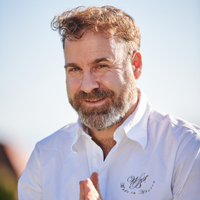
Stephan Landsiedel is a diploma psychologist and NLP trainer.