
 DE
 ES
 RU
 FR
 ZH
 HI
 GR


The 4MAT System (2)
The WHY Quadrant – Part 1

In our last issue, I gave you an overview of the 4MAT model and highlighted some initial aspects. Now, we're taking it a step further and dive deeper into the fascinating world of the "Why" quadrant in the next articles of this series. Right at the beginning of a seminar or workshop, this quadrant often already determines, whether the day will be a success.
The "Why Quadrant" is key to building genuine connection and motivation so the seminar can create a lasting impact.
In this issue, we'll begin with establishing rapport with the group.
Overview of the Why Quadrant
The first quadrant is aimed at those who thrive on a personal connection to the topic. These learners ask themselves: "Why is this important to me? How does it affect my life?" The central question here is "Why?" In this phase, you are especially addressing people who learn emotionally and experientially. They want to understand why the topic is relevant to them and how it can enrich their everyday life or work. The aim is to make it clear to learners why they should learn at all, so they can more fully engage with your seminar. To do this, you draw on everyday reference experiences that relate to the seminar topic. You dissolve objections, spark curiosity, and increase motivation by explaining the "Why."
This is most effectively done through stories, metaphors, or exciting anecdotes that make the topic tangible and create a sense of anticipation. Stories, personal reflections and lively discussions are key to linking the topic to the personal world of your participants. When your audience understands why the learning is meaningful to them—personally or professionally—they are much more likely to engage fully. Small introductory activities lighten the mood, support rapport-building, and create connections among the learners. A brief overview or an inspiring opening sets the tone and gets everyone aligned with the topic.
The goal of this phase is for each person to immediately think: "I need this!"— be for their career, personal development, or practical applications. With examples, success stories, or clever strategies, you can guide attention and raise your group's motivation to a new level. Starting a seminar with a gripping anecdote, a provocative question, or an inspiring story will captivate precisely this group of meaning-seakers. At the same time, you lay the foundation for everyone's motivation.
This phase arouses curiosity, creates relevance, and builds an emotional bridge to the topic—it's the first step towards sparking genuine interest.
When you offer practical examples in the "Why" and "What for" quadrants, you can get your participants to already start thinking about their benefits and generate ideas for how to apply them later. This makes them more willing to volunteer for demos and exercises. An ideal way to boost initiative and create a great seminar that is actively shaped by the participants!
The duration of the Why quadrant depends on the length of your presentation or seminar. For a short two-hour lecture, you shouldn't spend too much time on it, otherwise your participants may get impatient. For longer events, however, this quadrant can take up more space in order to motivate and involve learners sufficiently.
Building rapport in the Why Quadrant with NLP methods?
There is a whole range of targeted interventions that enable you to build strong rapport with your group.
Agreement frame – consent frame with pacing and leading
One particularly effective method for building rapport is the so-called agreement frame. The idea is simple: when people frequently agree with you internally, a feeling of trust and connection emerges. You want to create an inner "yes." You might know this from sales: customers are asked simple questions that they will likely answer with "yes" – for example: "Is safety important to you?" – "Yes."- "Is quality a decisive factor for you?" – "Yes." Once someone has said "yes" several times, it is easier for them to keep saying it. This also works the other way around – sometimes humorously – in parenting: "Will you clean your room?" – "No."- "Will you help with the trash?" – "No."- "Have you done your homework?" – "No."- "Do you want a chocolate bar?" – "No... uh, wait..." Once you are "in" a certain speech pattern, you often follow this inner rhythm automatically.
But this effect doesn't have to be created by asking questions. Internal agreement with statements – such as: "Yes, that's true. Yes, that's also true." – also builds rapport. That's exactly what pacing statements do: you say something that is undeniably true. This can be repeated several times – and then you add the first leading statement, which gently sets a new direction.
An example: "You've come here today. You're sitting here in the seminar room. We're starting the XY seminar on time, just as announced." (Pacing, pacing, pacing) "And you're looking forward to discovering some exciting new tools." (Leading)
"We are here at the NLP Trainer Training. You've all completed your Master degree and already gained lots of experience with NLP. (Pacing, Pacing, Pacing) "And now you want to learn new skills in working with groups." (Leading)
With this linguistic choreography – Pacing, Pacing, Pacing, Leading – you build trust and begin to gently guide the group.
What makes a good pacing statement?
a) Observable things
You describe what is directly perceivable – things participants can see, hear, or feel.
Examples:
- "The sun is shining."
- "You are sitting in a circle."
- "You arrived on time."
- "The windows are open and fresh air is coming in."
- "Most of you have taken notes."
These statements are particularly effective when phrased in a neutral and non-imposing manner.
b) Commonly accepted knowledge
You use statements based on everyday logic, shared experience, or socially accepted facts. These statements appear rationally comprehensible even if they are not necessarily scientifically "proven".
Examples:
- "People learn best when they feel safe."
- "Attention spans tend to be higher in the morning than in the late afternoon."
- "Change takes time."
These kinds of statements provide mental orientation and build rational confidence – especially useful for participants who are more cognitively focused.
c) Wisdom sayings and proverbs
This often includes vivid expressions taken from popular sayings, idioms, or inherited wisdom – In other words, collective life experience condensed into poetic form.
Examples:
- "The early bird catches the worm."
- "Every beginning is hard."
- "He who asks, leads."
- "All roads lead to Rome."
These types of statements generate emotional agreement and work especially powerfully on the subconscious level – they convey a sense of belonging and "ancestral wisdom".
Of course, you can combine these elements within the agreement frame. For example, begin with a rational, factually comprehensively statement and follow it with a proverb.
Example: "Learning requires trust. That's why we begin this day with a moment of connection. Because – as the saying goes – things are easier when we go together."
2. Cover all bases: reaching all participants with language that connects
The term "cover all bases" comes from baseball and means: cover every position, think of everything, leave no aspect unconsidered. In the NLP context -especially in seminars – this expression describes a trainer strategy to ensure that as many different participant types as possible feel adressed, seen, and included. You achieve this by specifically addressing various sensory channels (VAKOG) and metaprograms. Especially effective here is the use of Milton model language patterns.
Why is this important?
- You create rapport with the whole group, not just part of it.
- You increase the impact of your language through richness and variety.
- You reduce unconscious resistance because everyone feels "spoken to."
- You make unconscious diversity visible – and showcase NLP in real-time application.
a) Cover representational systems (VAKOG)
Use language that appeals to visual, auditory, and kinesthetic channels – and, if suitable, also olfactory and gustatory ones: "Today, you'll see exciting models (visual), hear interesting insights (auditory) – and clearly feel (kinesthetic) how you can apply them in practice." You can also include olfactory or taste anchors through metaphors or stories – e.g., "this tastes like success."
b) Include metaprogram pairs
Address opposite thinking and behavior styles at the same time. For example: "Maybe you want to bring more lightness into your communication – or maybe you want to avoid uncomfortable conflicts in the future." (toward vs. away from)
"Maybe you're here because you want to feel more confident speaking in front of groups – or because you finally want to stop freezing up in those situations." (toward vs. away from)
"You'll get clear, step-by-step instructions – as well as creative options you can use flexibly." (procedures vs. options)
The goal here is not to balance everything out perfectly, but to intentionally create variety and, if possible, keep connecting with as many participants as possible.
Example section for the start of your seminar
"In this training, you will experience how NLP works in depth. You will see new models, hear insightful questions – and feel what's shifting inside you. Maybe you want to improve your communication skills – or you are simply tired of feeling like you are disappearing in conversations. You will be given clear structures if that's what you need – and creative freedom if you like to improvise. And whether you're here to become a better leader, to grow as a coach, or simply for your own personal development – here is a room for your own path."
"Covering all bases" is lived appreciation through language: you show that all ways of thinking are welcome, and you make sure every individual feels included – without needing to address them directly.
The result: connection, openness, and impact.
3. Using milton language patterns
When a seminar begins, a lot is happening on a subconscious level. Participants are still in the process of arriving—physically in the room, and mentally into the topic. Some are curious, others skeptical. Some are observing, while others withdraw. It's a fragile phase where structure hasn't fully formed yet, but there are many questions in the room, often unspoken. And this is exactly where the Milton language patterns reveal their full power.
Instead of confronting the mind immediately with hard facts, these patterns invite the unconscious: with open formulations, ambiguities, images, and possibilities. They create a space in which everything is allowed to be —without anything needing to be decided yet.
Milton patterns are calming because they are not demanding, but inviting. They offer orientation without being restrictive. They say: "You can be here just as you are—and you'll still take something valuable away with you."
Especially at the start of an NLP seminar, these patterns are pure gold. They help to reduce tension, build trust, and lead the group into a state of inner readiness—ready to engage, explore, and learn. It's as if you're filling the room, not just with words, but with atmosphere. With resonance. With a kind of inner nod that doesn't even need to explain what it has already understood.
Those who open a seminar using Milton patterns are sowing small seeds of openness, which often blossom hours later when a participant says: "I don't even know why exactly, but somehow I was on board from the very beginning."
These artfully vague language patterns also help a lot in addressing various aspects in order to reach different types of participants. They therefore perfectly complement the "cover all bases" approach from the previous section.
A few practical examples can illustrate this quickly:
Opening of an NLP Trainer Training:
"I know that many of you are here because you want to offer your own NLP trainings. Some of you are here primarily to gain the certification to become a licensed trainer. Others want to improve their trainings in areas like time or project management. No matter what brings you here—you'll take something away with you. And even if you came for a completely different reason: over the course of this training, you will achieve your individual goals. Maybe not every single day, but by the end, you'll look back and say: Wow, this was really worth it for me. I've learned so much. So many micro-skills, so many tools."
Opening of an NLP practitioner seminar:
"Welcome to this room—and perhaps also to a journey you don't yet fully know where it will lead. Some of you might be excited to finally find out what NLP is all about... others already have a sense of it—and for some, today is simply the start of a new chapter. And as you sit here—in your exact seat—you can feel the room slowly filling with anticipation... or maybe it's something else you're noticing. It doesn't really matter what you think you already know. What matters way more is what you're going to discover, when you're ready to learn in your own way. And you don't need to do anything special right now... you can simply be here... listen, feel, observe... and notice how you naturally begin to open up... to new experiences. I don't know whether it will be a thought, a moment in an exercise, or maybe a sentence that touches you deeply...but at some point today—perhaps quite unexpectedly—you'll experience your first 'aha' moment... a little inner click...And that is often the beginning of something big."
Opening of a seminar on "Effective communication in groups":
"It's wonderful that you're here today—maybe you even arrived a few minutes early, just to settle in for a moment. Perhaps you've been wondering what to expect today... and maybe you also sensed that there's something exciting in the air—that feeling of: Something special is going to happen here today. And as you sit here—and can simply sit in whatever way feels comfortable to you—you might already begin to feel curious... about what you will discover today. You don't have to understand everything right away. Sometimes it's enough to simply stay open—open to new thoughts, new impulses... and new possibilities. Of course, I don't know exactly how you'll benefit most today... whether it's a thought, an experience, a sentence, or a small insight...but you will—entirely in your own way—take from this day exactly what is right for you in this moment. And it's good to know that learning happens all by itself... while you simply listen... and arrive fully within yourself."
4. Icebreaker games to get to know each other
Sometimes, it's the little things in a seminar that make the biggest difference. One of these small, almost inconspicuous methods is the "throwing animals" game, which I've enjoyed using with my seminar groups for many years. On the surface, it's just an activation game to get to know the names in the group better. But at the same time, it's a powerful rapport-building exercise. Beneath its playful character lies a surprising depth: attention is distributed, connections are created, and the group begins to network—with no need for big words.
What happens during "throwing animals"?
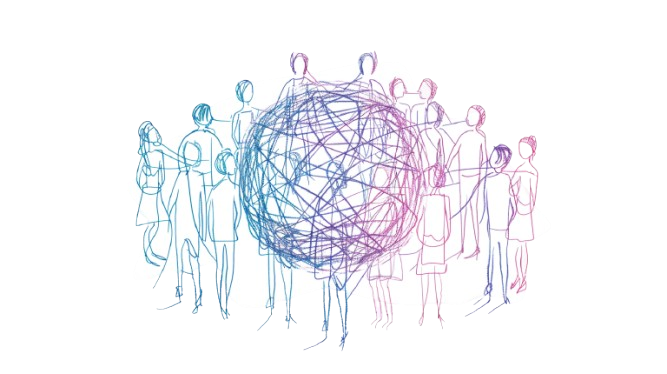
Imagine holding a small stuffed animal in your hand—maybe a frog, a koala, or a colorful plush bird. You are standing or sitting in a circle with your seminar group. You say: "My name is Jana—and I'm now throwing this animal to Tobias." As you throw the toy, you say the other person's name. Tobias catches the animal and continues: "I'm Tobias—and I'm throwing the animal to..." This continues until everyone has had exactly one turn. Then, as the trainer, you introduce a second animal into the circle, and another round begins. This time, each person throws the second animal to someone new. And so it goes on. After just a few rounds, something wonderful starts to happen: Participants stop focusing solely on you as the trainer—and start focusing on one another. They learn names. They make eye contact. They listen to each other. An invisible web of connection, play, and attention begins to form.

Why is this exercise so effective?
In its playful simplicity, the exercise activates multiple layers of rapport simultaneously:
Visual and auditory contact
The person throwing the animal looks directly at the receiver and says their name. The person catching the animal hears their name. This creates a feeling of being seen.
Movement and interaction:
The body is engaged—throwing, catching, reacting. A gentle way to enter into group flow.
Symbolism:
Even if no one consciously notices—it's there: The animal symbolically represents attention and connection. Whoever throws it gives something. Whoever catches it receives something. This subtly creates a sense of togetherness.
If you were to do the same thing with a ball of yarn, you would even see the resulting net at the end. With throwing animals, the net remains invisible—but just as tangible.
What effect does this have on your group?
Participants who were strangers just minutes ago suddenly start laughing together. The atmosphere loosens up. Names are learned—not under pressure, but with joy. Most importantly: the group begins to connect—not just to the trainer, but to each other. And that is crucial. Because learning in NLP doesn't happen through input alone—it happens through resonance in the room.
This game is perfect if you feel the group hasn't fully arrived yet—or if you simply want to begin with a positive, activating moment.
Throwing animals is more than a fun game—it is an NLP exercise in action. It works with perception, with language, with unconscious symbolism. It builds rapport—between people, between energies, between names.
5. The introduction round – more than just saying names
There are moments in a seminar that may seem quite unspectacular—but are, in fact, of great significance. The introduction round is undoubtedly one of them. Many treat it as a compulsory part of the program: "Name, job, and why you're here, please." But if you look more closely, you'll see that these first minutes already plant the seeds for rapport, connection, and trust—not only between the trainer and the group, but also within the group itself.
If you, as the trainer, truly take your time with the introduction round, it becomes much more than just listing facts. It turns into a mini-stage for meaningful encounters. This may be the first time a participant might hear something like: "I'm also really curious about NLP—and wasn't quite sure what to expect." Or: "I'm here because I want to finally learn how to set better boundaries." And suddenly something happens: resonance.
A sentence, a look, a smile—and people begin to feel connected. Not because they all share the same story, but because they recognize something human in each other's experience. Especially in NLP seminars, it's worth not rushing through the introduction round.
You can frame it intentionally—for example, by suggesting: "Feel free to share something that's important to you today—and you decide for yourself how much or how little you want to share." This gives space. Space for real words. For small revelations. For genuine encounters.
And while participants speak—and listen—something crucial begins to unfold: They become aware of each other. Not just as names on the same list, but as people with questions, goals, insecurities, longings. That is exactly what rapport is. And that is exactly where it begins—very quietly, very naturally.
6. Self-revelation & trainer authenticity
Rapport is not created by technique alone. It arises when people sense: "You are real. You truly mean it." When you, as a trainer, show yourself—share something personal, a thought, an experience, an insecurity, or even a mistake—something magical happens: your participants begin to lower their own defenses as well. This is because we unconsciously mirror the behavior of our counterpart. When you show openness, it invites others to open up too. I have experienced this time and time again in my seminars.
One particularly interesting moment was my first encounter with my business partner in China. At the time, he was just a regular participant in one of my seminars. During lunch break, he told me about his plan to open the first Landsiedel location in China and asked me to come for the opening and lead a seminar there. However, he also said that I absolutely should not tell my usual opening stories— because those often included how my own life hadn't always been perfect, and that a major personal crisis, in which I had even contemplated suicide, had ultimately led me to NLP. He explained that in China, a story like that would cause a great damage to one's image.
But in all my years as a trainer, I've always felt most at ease when I show up as I truly am. And when I notice something in myself that I perceive as a weakness and want to change, I use NLP to overcome it. That's why I begin many of my seminars not with textbook theory, but with real-life examples.
Just put yourself in the shoes of a participant of an NLP Practitioner course, where the trainer starts by saying: "I still remember how nervous I was during my first Practitioner seminar. I felt like everyone else already knew way more than I did. And to be honest—even when I started giving my own training courses later, there was still this voice in my head: 'Am I good enough?' Today I know: those doubts are often the first step toward real presence. And that's why I'm truly happy that you're here today—with everything you bring along."
What does this short moment of self-revelation do? It connects. It normalizes uncertainty. It opens up an emotional space. And it does so without drama—just through authenticity. Of course, self-disclosure and authenticity can also be overdone. You don't have to turn your innermost self inside out. It's not about emotional exposure.
But often, just a small glimpse behind the curtain—a human moment—is enough: A personal experience that shaped you. A sentence that once unsettled you. A failure that now contributes to your expertise. A wish you personally associate with the seminar.

What matters: Your self-disclosure should be useful for the group. It shows: "I've been where you are now."
What's at works here is what NLP refers to as rapport through equality: you're not presenting yourself as a superior expert, but as a learner among learners- perhaps a few steps ahead, but at eye level. That builds instant trust.
At the same time, you're using a powerful element of storytelling: Your story creates emotional resonance. And with that, you are saying: "I'm willing to show something of myself." True to the motto: If you want to touch others, you must be touchable yourself.
In a world full of trainers trying to do everything perfectly, the one who stands out is the one who doesn't take him- or herself too seriously—but takes their participants very seriously.
If you want to build rapport in the Why quadrant, it's absolutely okay to start by simply being yourself—with heart, humor, and with the willingness to say: "I'm also on the journey—just like you." That's not just approachable. In my view, it's what authentic NLP training is all about.


Stephan Landsiedel is a diploma psychologist and NLP trainer.