

 DE
 ES
 RU
 FR
 ZH
 HI
 GR


The 8 Hypnotic Principles

Effective Communication in Everyday Life
Marian Zefferer explains how conscious communication increases our effectiveness. Through conscious word choice and targeted techniques, we can create deeper connections and influence conversations. Discover how you can use these principles in everyday life to improve your communication skills.
Have you ever wondered why some people achieve so much more with their words than others? Why certain conversations stick with you for hours while others just pass you by without a trace?
The answer might lie in the hypnotic power of language – a power we all use every day, often without realizing it.
State vs. Non-State: What Really Defines Hypnosis
In the world of hypnosis, there are two main schools of thought: The State Theory and the Non-State Theory. While the State Theory assumes that hypnosis is a special state of consciousness into which someone must be "put", I personally take a more pragmatic approach with the Non-State Theory.
To me, hypnosis is not a mysterious state, but simply effective communication. In other words: "Hypnosis is when you create a context in which communication becomes effective." This perspective opens our eyes for a surprising realization: We are constantly hypnotizing each other in our everyday lives – and being hypnotized ourselves.
The question isn't whether hypnosis is happening, but how consciously and effectively we use it.
To harness the power of hypnotic communication, I developed eight principles in 2024 to help you increase your impact in conversations with others. The idea was, on the one hand, to define hypnosis (from the perspective of the Non-State Theory) – What are we actually doing when we talk about hypnosis? And on the other hand, to make the mechanisms behind excellent communication transparent.
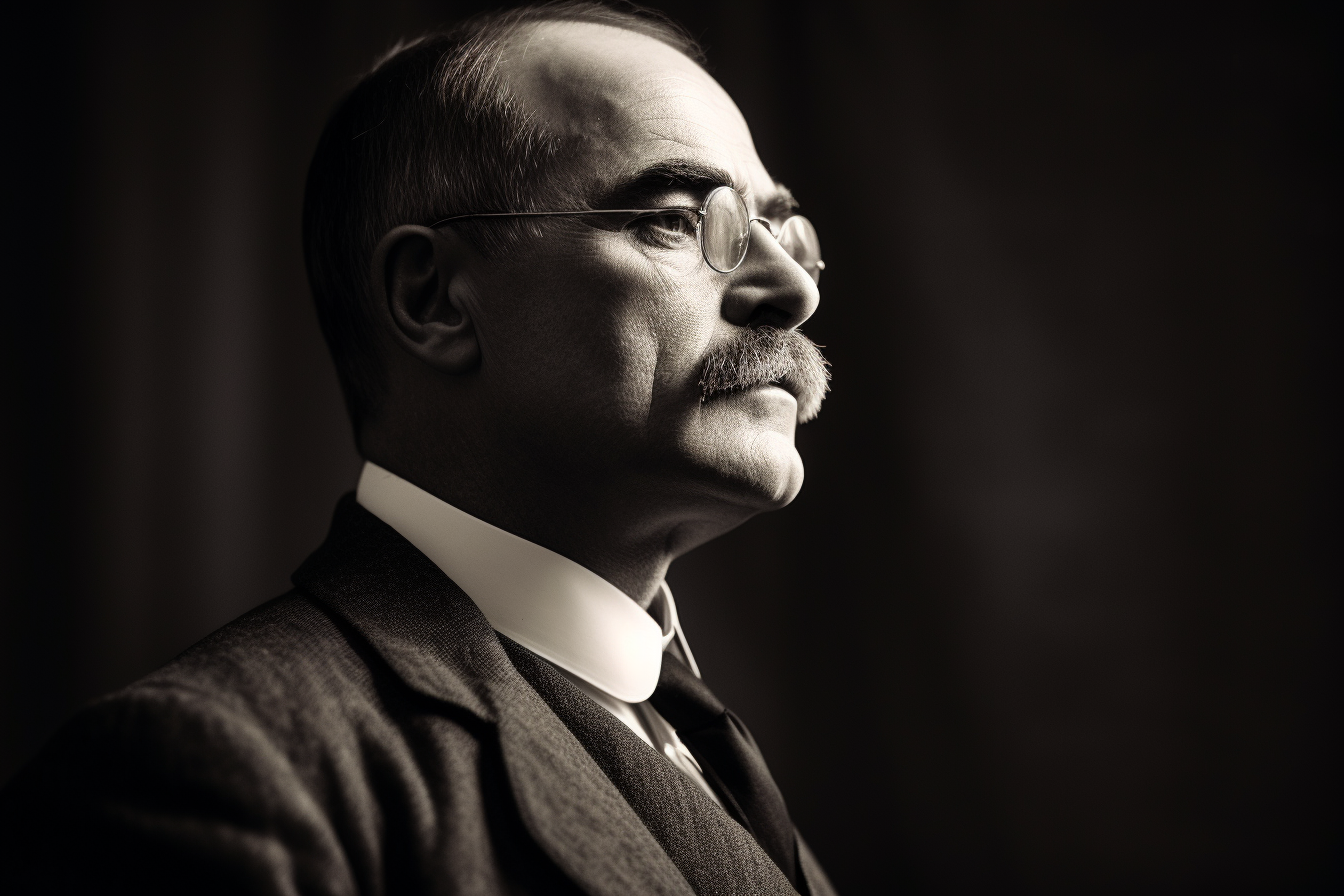
"Words are the most powerful drug used by mankind"
- Rudyard Kipling
The 8 Hypnotic Principles – Crash Course
1. The Principle of Context
What is it about?
The context determines the impact of your words.
Imagine saying the same sentence – once in a job interview, once at dinner with friends. The effect would be completely different, even though the words are the same. The context determines how your message is received.
Example: If you tell someone to "Just relax", it will come across differently in a coaching setting than during a heated argument.
2. The Principle of Repetition
What is it about?
What is repeated is memorized. "Repetition works, repetition works, repetition works." There's a reason why advertising, school, and politics have always used this principle. What we hear multiple times seems more important – and we remember it better.
Example: Instead of making an argument once, I weave it into a conversation several times using different phrasing. This effect usually increases with each repetition.
3. The Principle of Cooperation
What is it about?
Effectiveness is achieved through cooperation, not confrontation.
Hypnotic communication does not work against the will of the other person, but with it. For example, by emphasizing common ground and using "we" formulations (see the first part of this series of articles: conversational hypnosis), I create a basis for cooperation.
Example: Instead of "You should...", say "We could..."
4. The Association Principle
What is it about?
What a client identifies with, is in his perception, more powerful, than that what he doesn't identify with.
To be effective, I must be able to see the world through the eyes of the person I am talking to. I use language and metaphors that make sense in their world of experience.
Example: If your counterpart finds it very difficult to distance himself from a conflict, you could say: "I understand that it's hard to look at it from the outside. Let's just look at your perspective for now – and later, when you're sitting in that chair, then we'll look at the other person's perspective only."
5. The Principle of Sensory Activation
What is it about?
Images have a stronger effect than abstract concepts. Our brain thinks in images. When I use vivid, sensory language, I stimulate my counterpart's imagination and trigger stronger emotional responses.
Example: Instead of "That's difficult," you could say "It's like wading through a swamp carrying a heavy backpack." And later: "What would help you to take off that backpack?"

6. The Principle of Attention
What is it about?
What we focus our attention on, we amplify.
Rather than talking about what someone doesn't want, it's often better to ask what they do want. Instead of focusing on how tedious doing taxes is, it is more motivating to focus on how to take the first step – after that is accomplished you can let it go. But the likelihood is high that you will fill out the entire tax declaration right away.
Example: After students have achieved something, it doesn't make sense to say: "you're intelligent." because that focuses on intelligence – which is often assumed to be there or not.
As a result, the performance of these students drops measurably as they don't want to embarrass themselves. It would be better to say: "Right, you were dedicated and worked your way to the solution." Since dedication is not static, these students now try even harder.

7. The Principle of Utilization
What is it about?
Use resistance instead of fighting it.
When I sense resistance, I don't fight it – I acknowledge it, make it part of the conversation and use it as a bridge.
Example: "I understand your concerns – and precisely because security is so important to you, it's worth considering this alternative..."

8. The Principle of Smooth Transitions
What is it about?
People rarely experience sudden teleportation – problem gone, solution appears bam.
We experience it more like a river that is constantly changing. If we communicate these transitions (e.g., from problem to solution) through language, it's easier for the other person to follow along with the solution.
Example: "You describe that working with your colleague is very exhausting. Perhaps there is also a part of you that wants to give up... at the same time there is a part that wants to change something. Assuming that part already had a solution – what would it look like?"

A Case Study from Coaching
Michael – let's call him like that – came to me because he wanted to improve his presentation skills. As an IT project manager, he had to regularly present in front of his team and upper management – but he felt extremely uncomfortable and blocked doing so.
I work exclusively online in my coaching sessions. This has the advantage that most clients are at home, in a context where they already feel safe and comfortable (cooperation). When used correctly, this means you already have a "home game" when it comes to rapport. The client also had to give some of his presentations online anyway – right from the same spot as our coaching sessions.
First, we looked for exceptions. At first, it seemed like there had only ever been one past occurrence without nervousness. But after some exploration, we found nearly a dozen examples (giving a speech at a child's birthday party, speech among friends...).
I paraphrased these examples (repetition) – and reflected on what already worked (attention).
The biggest difference, though, came from the combination of the principle of association paired with figurative language and utilization. Michael often said he felt "paralyzed." I picked up on that image and asked: "Assuming this paralysis is actually a form of protection that your body is giving you – what exactly is it protecting you from?" This reframing opened up new perspectives and a feeling that not everything is bad. This in turn relieved pressure.
Even after just one session, Michael felt significantly more confident – even though we had "just talked."

Your Path to Hypnotic Communication
"The art of communication is the language of leadership." – James Humes
The good news: you don't have to be a certified hypnotist to use these principles. They're available to you in every conversation.
Start with one principle that particular resonates with you – perhaps it is figurative language or repetition. Observe how your communication changes when you use it intentionally.
As Prior (2023) emphasizes in his book "MiniMax Interventions": it's often the smallest changes that have the greatest impact.
The Magic Lies in the Application
The 8 hypnotic principles are not a secret formula for manipulation, but tools for more effective and respectful communication. They help you deliver your message in a way that truly resonates and works.
Suppose that starting tomorrow, you used just one of these principles intentionally in your conversations – which one would it be? In which relationship would it make the biggest difference?
And how would your day-to-day communication change if you gradually integrated all the principles?
The answers to these questions are the beginning of your journey to more impactful communication. And as with any journey, the most important step is the first.
If this topic inspires you, feel free to recommend World Magazine to friends so that more people can discover and use these ideas. In my upcoming articles, I'll dive even deeper into each of these principles.

Marian Zefferer is an Austrian psychologist and NLP master trainer who specializes in self-influence and personal development, sharing his knowledge through seminars, podcasts, and online courses.