
 DE
 ES
 RU
 FR
 ZH
 HI
 GR


NLP for Stress Management:
From State of Emergency to Everyday Life

NLP as Stress Management
Intensive care nurses are exposed to enormous stress – both physically and emotionally. A study shows that Neuro-Linguistic Programming (NLP) can help effectively manage these pressures. Through structured NLP training, participants were able to significantly reduce their stress levels and gained greater inner clarity, control, and resilience. The article outlines the course of the intervention, presents the study’s results, and highlights that NLP can be helpful not only in hospital settings but in any context where people face high pressure.
The intensive care unit never sleeps. Even at night, everything remains in motion: monitors flicker, machines beep in rhythm with the monitoring, footsteps echo down the corridor. A nurse quietly closes a door, hands a patient some water, answers a question, thinks about the next task – and only later notices the tightness in their chest.
On the ICU, everything is geared toward precision. Nurses act routinely, respond quickly, and work with full concentration, because every moment counts. Yet what from the outside appears as a well-oiled system is, for those inside, a constant test of endurance. The severity of patients’ conditions, the responsibility for life and death, the time pressure, and the emotional closeness to patients and their families generate stress levels far beyond ordinary work demands.
And yet: What if there were ways not only to endure external pressure but to meet it internally with greater strength and clarity? What if it weren’t only the external conditions that mattered, but the way one processes them personally?
A study from Iran shows that nurses who work with NLP methods can significantly reduce their stress levels. The quasi-experimental study was conducted in two large hospitals in the city of Urmia. A total of 60 nurses from critical care units participated – divided into an intervention group that received NLP training and a control group without intervention. All participants had at least six months of professional experience, were psychologically stable, and were not taking any medication for stress management.
Over a period of six months, the nurses in the intervention group took part in a structured NLP program consisting of 18 sessions of three hours each. Key elements were taught, including goal setting, time management, assertive communication, mental reframing techniques, work with representational systems, and the Disney strategy. Theory and practice alternated, exercises were reflected upon, and content was anchored.
Stress levels were measured before and after the intervention using the Expanded Nursing Stress Scale (ENSS) – a scientifically validated instrument that assesses work-related stress across nine subdimensions, including “death and dying,” “conflicts with supervisors,” and “workload.” This allowed not only general but also area-specific changes to be observed.
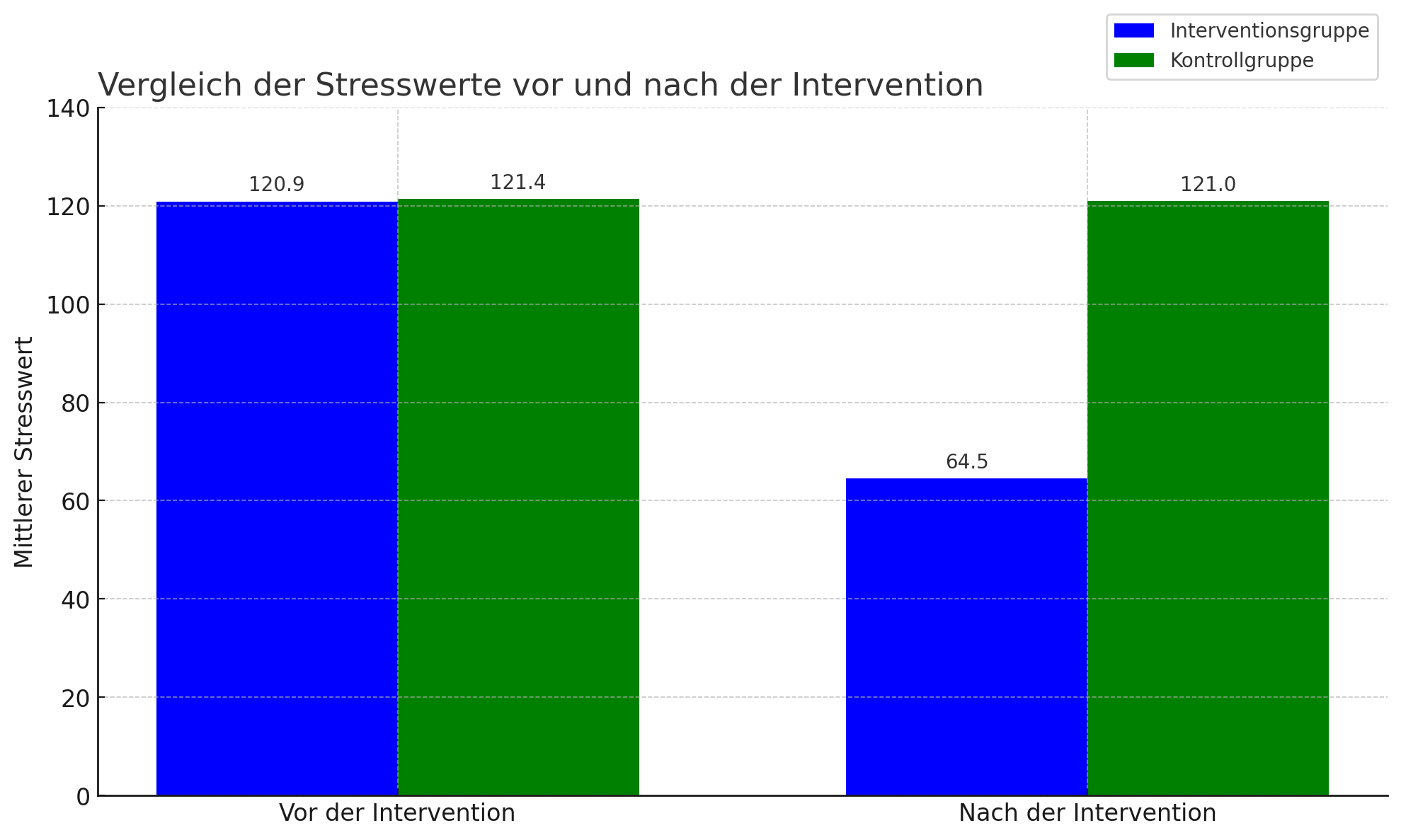
The study’s results showed that stress levels in the intervention group decreased significantly through the NLP sessions, dropping on average from about 121 to 65 points, while the control group remained almost unchanged. Statistically, the difference between the groups after the intervention was highly significant (p = 0.0001), indicating the strong effectiveness of the NLP program. The analysis revealed significant improvements in various stress subcategories, such as conflicts with supervisors, patients, and families, as well as issues related to death and dying.
The nurses also reported a subjective increase in their sense of control, greater inner clarity, and an improved ability to handle emotionally challenging situations. The NLP program did not act as a short-term mood booster but as a structured process for developing new mental habits with tangible effects on everyday professional life.
This study makes it clear: NLP works even under extreme conditions. If ICU nurses can significantly reduce their stress using NLP strategies, the same principles can be applied to many other areas of life and work.
Stress doesn’t only affect people in hospitals. In the office, at home, in classrooms, or within families, we regularly experience pressure. We lose perspective, feel rushed, and react instead of acting intentionally. This is exactly where NLP methods come into play. And the best part: NLP is learnable. No prior knowledge is needed—only the willingness to better understand yourself and consciously shape your reactions. The study shows that it doesn’t take many sessions; structured guidance and consistent practice are enough to achieve measurable changes.

Stephan Landsiedel ist Diplom Psychologe und NLP Ausbilder.