

 DE
 ES
 RU
 FR
 ZH
 HI
 GR


Feedback Puzzle: A Creative Method for Lively Feedback Rounds
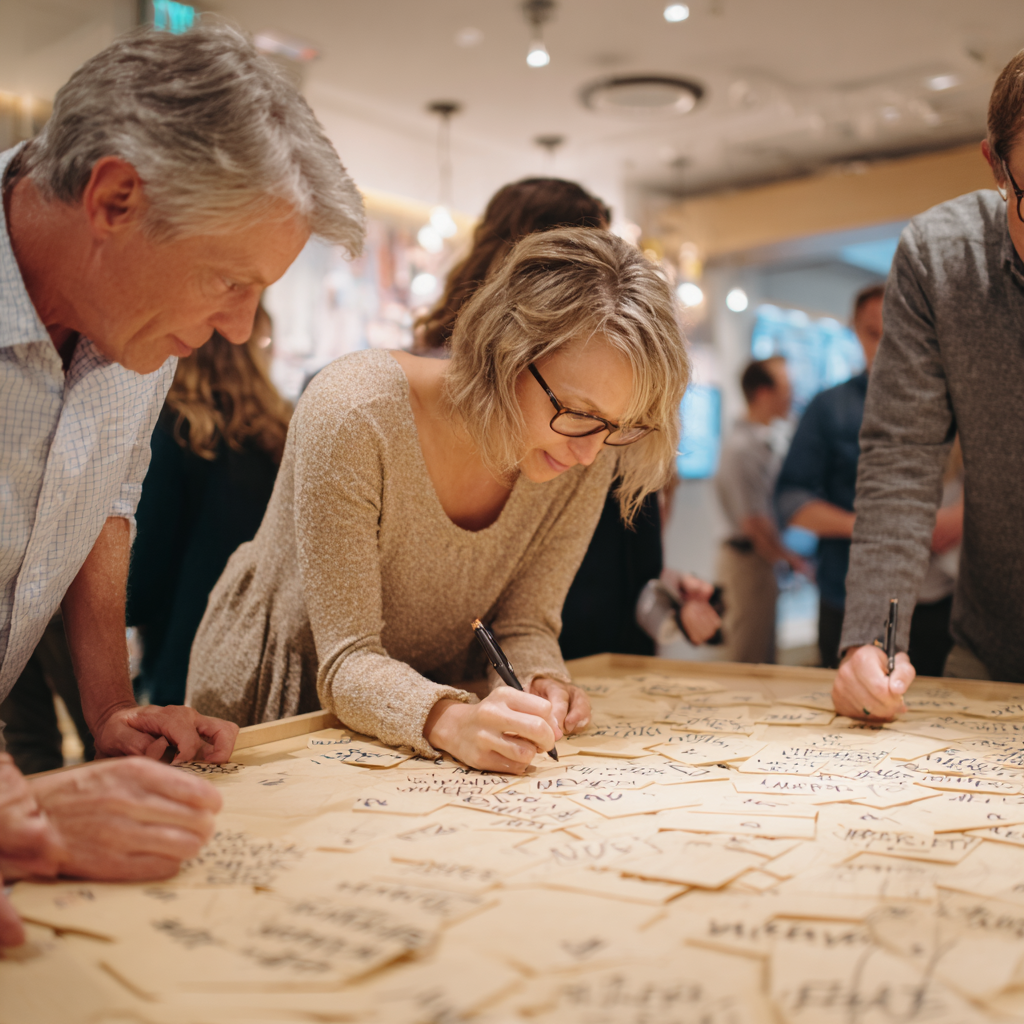
After a training session, participants often feel a mixture of fulfillment, inspiration, and thoughtfulness. Some are full of energy, excited about new insights, while others still need time to process what they have learned. The atmosphere is usually open, appreciative, and collaborative—an ideal moment to gather genuine, honest feedback and continuously improve the training.
But how can you make this feedback session even more original and motivating than just asking the usual questions? This is where the feedback puzzle comes in – a creative, playful method that actively involves all participants and transforms feedback into a visual, collaborative experience.
What is the feedback puzzle?
Instead of listening to individual voices one after the other, participants share their impressions in small, understandable "puzzle pieces." Each puzzle piece contains brief feedback, a suggestion for improvement, or a question. Together, we assemble these pieces into a large, colorful picture—the "feedback puzzle"—which reveals the diverse opinions and experiences of everyone involved.
Advantages at a glance:
- Motivating & active: All participants are involved and contribute to the overall picture.
- Creative & vivid: The visual puzzle makes feedback tangible and understandable.
- Open & appreciative: Every contribution is visible, which encourages honesty.
- Collaborative & inspiring: Working together on the puzzle strengthens the sense of community and stimulates new ideas.
How to prepare the feedback puzzle:
- Use an online tool such as Mural, Demio, or Click-Meeting to create a workspace.
- Define areas or questions, your puzzle pieces, e.g., "What did you like best?", "What else could you wish for?" or categories such as "Content," "Methodology," "Atmosphere."
- Explain to participants that they should write down their feedback in the form of puzzle pieces—short, specific, and honest.
- Encourage them to be creative with their contributions, e.g., using short sentences, symbols, or colors.
4-step process:
- Introduction: Explain why feedback is important and how the puzzle works. Create curiosity and a positive atmosphere. Emphasize that all contributions are valuable and explain the purpose of the feedback, e.g., to continuously improve the training.
- Creating the puzzle pieces: Participants write or draw their feedback on a "puzzle piece" template. Ask them to write brief, specific feedback on one of the aspects on the puzzle pieces (e.g., "More practical exercises," "Clearer explanations," "More interaction").
- Assembling: Participants position their pieces in the appropriate places in the workspace, depending on the topic or category. Meanwhile, you can provide brief summaries or comments to stimulate discussion.
- Reflection & discussion: Look together at what the big picture shows. Highlight positive aspects, collect suggestions for improvement, and derive concrete measures.
Extra knowledge: Free, Mural is a web platform that provides blank canvases. On these, you can work freely alone or in teams with virtual sticky notes. The sticky notes appear with a double-click on the canvas and can then be freely moved, arranged, or clustered. The sticky notes come in various shapes and colors. It is also possible to write directly on the canvas without sticky notes and draw freehand.

Stephan Landsiedel is a diploma psychologist and NLP trainer.