

 DE
DE ES
ES RU
RU FR
FR ZH
ZH HI
HI GR
GR


Metaprogram: Stress Response
How does a person react to stress in a work context?
Wouldn't you be glad to find out in five minutes or less whether someone can handle a highly stressful job?
The Stress Response category refers to how someone reacts to typical workplace pressures and demands in their specific context. This isn't about how someone would cope with exceptionally dramatic stress situations, as nearly everyone would show emotional reactions in those cases. There are three different response patterns to these "normal" stress situations:
Emotional:
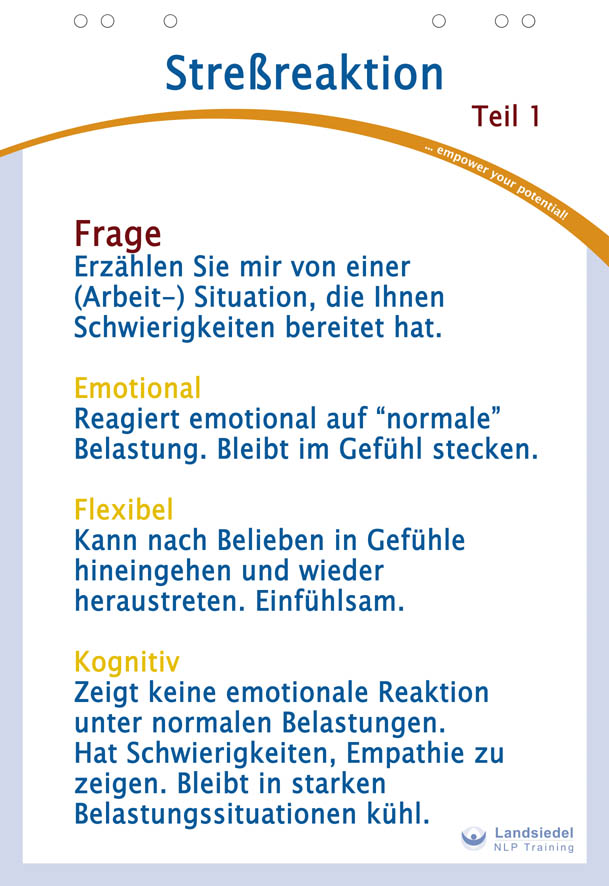
People with an emotional pattern react emotionally to normal workplace stressors. They respond with a feeling and remain in that feeling. Therefore, highly stressful positions are difficult for them to manage long-term.
Others will often perceive them as overreacting to situations or being hypersensitive. They are well-suited for artistic or creative tasks where emotions are essential. When working in sales, they struggle with rejection and therefore avoid acquiring new customers.
Flexible:
People with a flexible pattern initially have an emotional reaction to normal workplace stressors but can then choose whether to return to a non-emotional (neutral) state or not. They have choice. Because they experience emotions themselves, they can empathize with others - or choose not to. They are well-suited for managing employees as they can both personally engage with others and, when necessary, distance themselves again.
Cognitive:
People with a cognitive pattern don't react emotionally to normal stressful situations in a given context. They find it difficult to empathize with others because they themselves don't react emotionally. In most emergencies, they won't panic but will keep a cool head. They reliably perform even in positions that involve significant stress.
Pattern Recognition Question
Tell me about a work situation that was difficult for you.
As the person describes the situation, you need to assess whether they: enter an emotional state and can't free themselves from it, show an emotional reaction and then detach from it, or show no emotional reaction at all.
Nonverbal Cues:
Emotional:
- Displays a clear emotional reaction in voice and behavior while describing a difficult situation.
- Changes in three or more of the following areas indicate a change in emotional state: posture, gestures, facial muscle tension, lowering gaze, changes in timbre, tonality, speed and volume of speech; remains in the emotional state throughout the entire description.
Flexible:
- Initially reacts emotionally but then returns to a neutral state
Cognitive:
- No emotional reaction
Statistical Distribution:
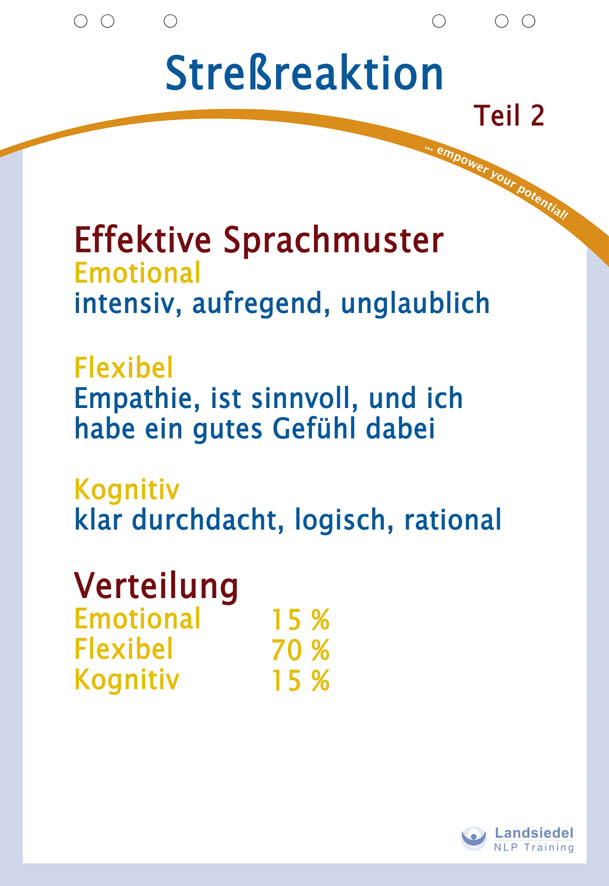
emotional 15%, flexible 70%, cognitive 15%
Effective Language Patterns:
Emotional: Spark your enthusiasm and focus on the feeling, with words like: intense; exciting; incredible; extraordinary; etc.
Flexible: Choose words that suggest you can experience emotions and then step out of them at will, for example: "You can really get excited about this and then even recognize that it makes absolute sense."
Cognitive: Present the logical facts: the hard reality; the bare facts; clear thinking; statistics.