

 DE
DE ES
ES RU
RU FR
FR ZH
ZH HI
HI GR
GR


Model of the Communication Process
Any verbal or nonverbal communication can be understood as a statement about three areas of experience:
- About the communicator, the Self (S)
- About the person to whom the communication is directed, the Other (O), and
- About the Context (C).
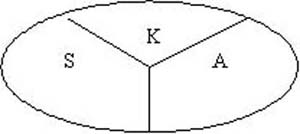
If someone is unable to express or consciously experience one or more of these areas in their communication, it leads to limitations in their life. The goal is to recover the deleted content.
The Communication Process
In communication, various components play a role:
The body, which moves in a certain way, has a specific posture, etc. This is the basis for nonverbal communication.
The sensory organs, which allow the intake of information from the environment. The brain, where new experiences are compared to previous ones and information is stored. Personal expectations and values also influence the comparison processes in the brain. Of course, the ability to speak also plays a central role in communication.
The exchange of information and thus communication is a complex and far from objective process. Every message sent by another person undergoes an interpretative process based on expectations, values, and experiences.
A lack of awareness regarding the complexity of communication processes is, according to Virginia Satir, one of the main causes of misunderstandings. Therefore, in her therapy, she always tried to reveal and improve communication patterns using real examples (e.g., disputes between siblings).
Especially in families, misunderstandings and misinterpretations in communication have a significant impact because habitual behavior develops to a certain extent, and once a person has formed an opinion, they usually no longer check whether it is correct and simply assume it as given.
Virginia Satir did not treat specific problems, but instead tried to create progressive, generative change based on specific issues, so that there could be a lasting improvement in communication.
The Five Freedoms
- The freedom to see and hear what is, rather than seeing and hearing what should be or what will be.
- The freedom to say what you feel and think, rather than saying what you should say about it.
- The freedom to feel what you feel, rather than feeling what you should feel.
- The freedom to ask for what you want, rather than always waiting for permission to do so.
- The freedom to take risks for your own interests, rather than choosing to "play it safe" and "not rock the boat."